
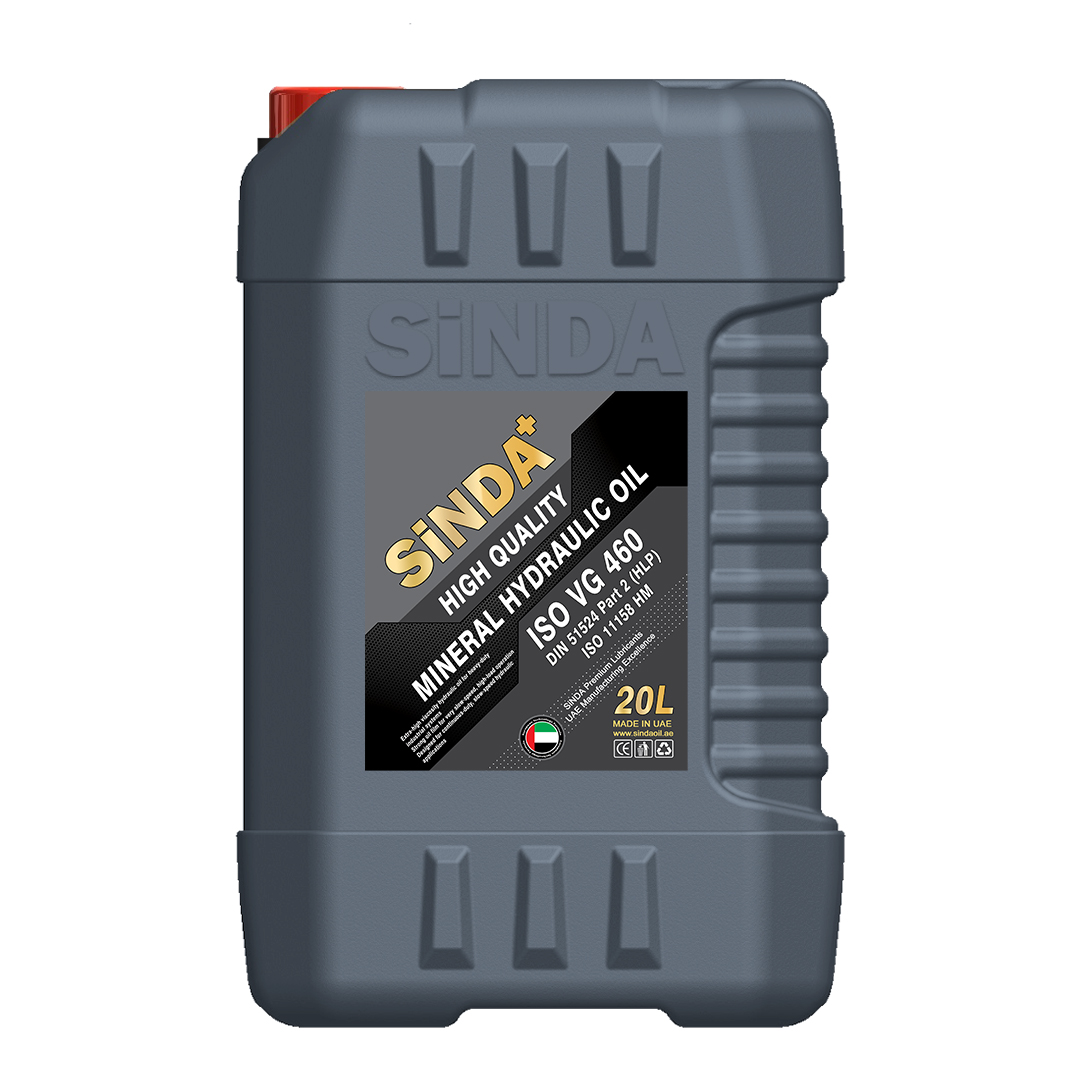
Extra-high-viscosity hydraulic oil engineered for very slow-speed, high-load hydraulic and circulation systems—where maximum film thickness, internal leakage reduction, and shear-stable viscosity are critical for continuous operation.
Hydraulic Oil 460 is formulated for industrial hydraulic systems operating under very slow actuator movement, sustained high pressure, and heavy mechanical loading. In these conditions, lower viscosity grades may not maintain adequate film thickness, increasing the risk of boundary contact, wear, and pressure instability—especially in systems with larger clearances.
Hydraulic Oil 460 provides a thick, load-bearing lubricating film to support component separation where speed is low and load is consistently high. It is typically selected in heavy-duty hydraulic and circulation applications where film strength and leakage control are more critical than low-temperature pumpability or high-flow responsiveness.
SiNDA Hydraulic Oil 460 is supplied for industrial users that require consistent quality, batch traceability, and reliable availability for demanding operating environments.
Hydraulic Oil 460 is typically selected for systems where operating severity exceeds the limits of ISO 320:
Hydraulic Oil 460 aligns with ISO VG 460 viscosity classification (nominal kinematic viscosity at 40 °C). This places it among the highest commonly used viscosity grades for industrial hydraulic and circulation systems.
Base oil: Mineral
Viscosity behavior: Optimized for maximum film thickness and shear-stable viscosity under load
Additive system focus: Oxidation stability, corrosion protection, and foam/air-release control
(Detailed numeric values and any approvals are defined in the official technical documentation.)
Example: In a heavy forging press operating slowly under constant load, Hydraulic Oil 460 maintains surface separation more effectively than ISO 320, reducing wear on pump elements and extending service intervals.
Risk awareness: Using ISO VG 460 in systems not designed for this viscosity may increase energy consumption, elevate operating temperatures, and cause sluggish response—particularly during start-up or in cold conditions.
Viscosity selection must reflect load severity, operating speed, and temperature:
A heavy industrial press operating continuously at low speed with sustained pressure → ISO 460 ensures maximum film strength and component protection.
A mobile hydraulic system with variable speed and cold starts → ISO 460 may cause excessive energy loss and delayed response.
Hydraulic Oil 460 follows ISO viscosity classification and is formulated for common industrial hydraulic oil performance requirements. Any applicable DIN/ISO references or system-specific requirements should be confirmed against the official technical documentation for the supplied grade.
When loads are extreme and system movement is very slow, requiring maximum oil film thickness.
No. Excessive viscosity can reduce efficiency and increase heat if not matched to system design.
In worn or large-clearance systems, a higher viscosity grade can help reduce internal leakage and improve pressure stability—provided the pump and controls can handle the increased viscosity.
Generally no. Lower viscosity grades are preferred where cold-start performance is required.
SiNDA Hydraulic Oil 460 is an extra-high-viscosity industrial lubricant designed for hydraulic and circulation systems operating under extreme load and very low speed. When correctly matched to system design, it supports high film strength, reduced wear, and stable long-term operation. Correct viscosity selection remains critical to avoid efficiency loss, elevated temperature, or sluggish system response.
For direct and secure purchases with guaranteed quality, contact our experts now and benefit from free consultation.