
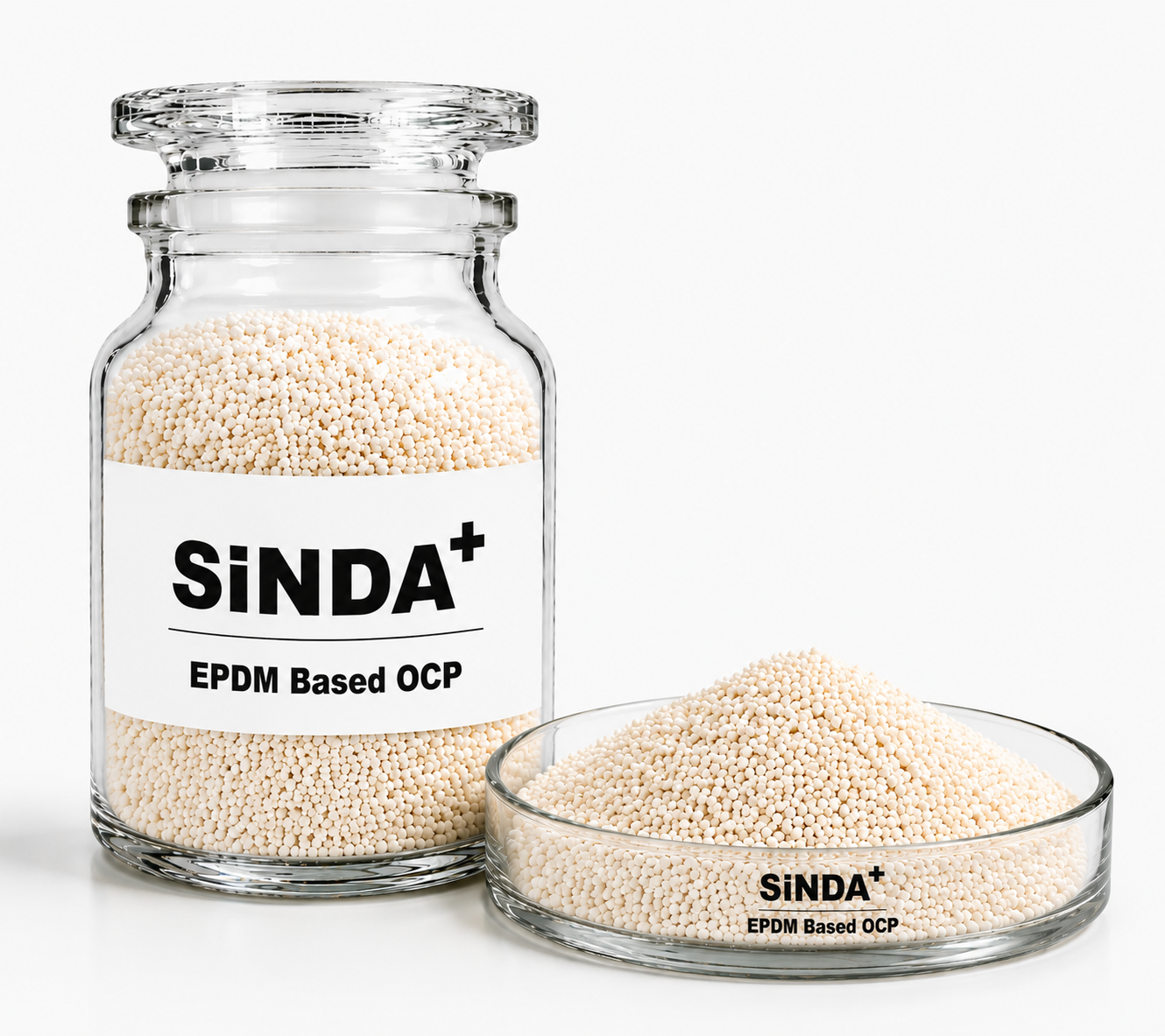
EPDM Based OCP
EPDM Based Olefin Copolymer (OCP) viscosity index improver for lubricant manufacturers seeking efficient viscosity modification, broad base oil compatibility, formulation flexibility, and consistent production performance.
- Polymer Technology
- Packaging
- High Shear Stability
- Open this page on mobile
Product Overview
Modern lubricant formulations require advanced viscosity modifier technologies capable of providing stable viscosity control, efficient thickening performance, and compatibility with different base oil systems. The selection of the appropriate polymer structure allows lubricant manufacturers to optimize formulation performance and production efficiency.
EPDM Based OCP is an Ethylene Propylene Diene Monomer (EPDM) Based Olefin Copolymer Viscosity Index Improver supplied by SiNDA through qualified international manufacturing partners for lubricant manufacturers and formulators.
Developed using EPDM polymer technology, this viscosity modifier provides efficient viscosity improvement, reliable thickening performance, and formulation flexibility for a wide range of automotive and industrial lubricant applications.
The EPDM-based polymer structure combines ethylene, propylene, and diene components to provide controlled polymer characteristics suitable for lubricant formulation requirements. This technology enables formulators to develop multigrade lubricants with stable viscosity-temperature performance and consistent blending behavior.
Compatible with commonly used lubricant base oils, including Group I, Group II, and Group III base oils, EPDM Based OCP supports the formulation of passenger car motor oils, heavy-duty diesel engine oils, hydraulic oils, industrial gear oils, and other industrial lubricant products.
Through international sourcing capability, technical documentation support, and SiNDA commercial packaging solutions, SiNDA provides lubricant manufacturers with reliable access to EPDM based OCP viscosity modifier technology.
Key Benefits
- EPDM polymer-based OCP technology
- Efficient viscosity index improvement
- Reliable thickening performance
- Good formulation flexibility
- Stable blending characteristics
- Compatible with Group I, Group II, and Group III base oils
- Suitable for automotive and industrial lubricant formulations
- Consistent technical documentation and supply support
Operational Applications
EPDM Based OCP is designed for lubricant manufacturers developing viscosity-controlled lubricant formulations.
Typical applications include:
- Passenger Car Motor Oil (PCMO)
- Heavy-Duty Diesel Engine Oil (HDEO)
- Multigrade Engine Oils
- Synthetic Blend Lubricants
- Hydraulic Oil Formulations
- Industrial Gear Oil Formulations
- Industrial Lubricant Formulations
Technical Overview
EPDM Based Polymer Technology
EPDM Based OCP technology utilizes an ethylene-propylene-diene polymer structure designed to provide controlled viscosity modification and reliable performance in lubricant formulations.
The incorporation of diene components within the polymer structure enables formulators to achieve specific polymer characteristics suitable for advanced lubricant applications.
EPDM Based OCP technology supports lubricant formulation development by providing:
- Efficient viscosity modification
- Stable polymer performance
- Good formulation flexibility
- Reliable blending characteristics
- Compatibility with commonly used lubricant base oils
The controlled molecular structure of EPDM Based OCP allows lubricant manufacturers to optimize viscosity-temperature behavior while maintaining consistent production performance.
Performance Characteristics
Efficient Viscosity Modification
EPDM Based OCP provides effective viscosity improvement through controlled polymer expansion within the lubricant formulation.
Benefit:
Enables lubricant manufacturers to achieve target viscosity grades with optimized polymer utilization.
Formulation Flexibility
The EPDM polymer structure provides flexibility for lubricant formulators developing different automotive and industrial lubricant products.
Benefit:
Supports a wide range of lubricant formulation requirements.
Stable Blending Performance
EPDM Based OCP is designed to provide consistent blending behavior during lubricant manufacturing processes.
Benefit:
Improved production consistency and formulation reliability.
Base Oil Compatibility
EPDM Based OCP is suitable for formulations based on:
- Group I Base Oils
- Group II Base Oils
- Group III Base Oils
Benefit:
Provides flexibility for mineral, semi-synthetic, and synthetic blend lubricant formulations.
Compatibility & Limitations
EPDM Based OCP is intended for lubricant manufacturers requiring a reliable viscosity index improver for automotive and industrial lubricant formulations.
Recommended applications include:
- Passenger Car Motor Oil formulations
- Heavy-Duty Diesel Engine Oil formulations
- Multigrade Engine Oils
- Hydraulic Oil formulations
- Industrial Gear Oil formulations
- Industrial Lubricant formulations
Final lubricant performance depends on:
- Base oil selection
- Polymer concentration
- Additive package compatibility
- Target viscosity grade
- Finished lubricant performance requirements
Laboratory formulation validation is recommended before commercial production.
Selection Guidance
Selecting an OCP viscosity index improver requires consideration of polymer structure, viscosity modification efficiency, formulation objectives, and finished lubricant requirements.
EPDM Based OCP is recommended for lubricant manufacturers seeking:
- EPDM polymer-based viscosity modifier technology
- Reliable viscosity control
- Flexible formulation capability
- Good blending characteristics
- Consistent production performance
When selecting EPDM Based OCP, formulators should evaluate:
- Target SAE viscosity grade
- Base oil composition
- Required viscosity index improvement
- Operating temperature range
- Polymer dosage
- Finished lubricant specifications
For automotive and industrial lubricant manufacturers, EPDM Based OCP provides a practical polymer solution for developing stable and efficient lubricant formulations.
Compliance & Standards
EPDM Based OCP is supplied by SiNDA through qualified international manufacturing partners under controlled commercial and technical documentation procedures.
To support lubricant manufacturers during product evaluation, formulation development, and procurement processes, SiNDA provides technical documentation including:
- Technical Data Sheet (TDS)
- Safety Data Sheet (SDS)
- Certificate of Analysis (COA)
- Batch Quality Documentation
- Product Handling Guidelines
- Storage Recommendations
- Export Documentation
Each supplied batch is supported through appropriate quality verification procedures to ensure product consistency, traceability, and reliable technical evaluation.
Why Choose SiNDA
Selecting a viscosity index improver requires a combination of polymer technology, supply reliability, technical documentation, and formulation support.
SiNDA supplies EPDM Based OCP viscosity index improver technology through qualified international manufacturing partners, supporting lubricant manufacturers with reliable polymer solutions for automotive and industrial lubricant production.
Key advantages include:
- Responsive technical support during formulation development
- Access to qualified international polymer manufacturing sources
- Consistent product quality
- SiNDA commercial packaging solutions
- Technical documentation support
- Support for lubricant formulation development
- Flexible cooperation with lubricant manufacturers and distributors
- Reliable supply solutions for international lubricant markets
Industrial FAQ
What is EPDM Based OCP?
EPDM Based OCP is an Ethylene Propylene Diene Monomer Based Olefin Copolymer Viscosity Index Improver designed for lubricant manufacturers producing automotive and industrial lubricant formulations.
What is the function of EPDM Based OCP?
EPDM Based OCP is used to improve viscosity-temperature characteristics by providing efficient viscosity modification and stable polymer performance in lubricant formulations.
What is the difference between EPM Based OCP and EPDM Based OCP?
The primary distinction is the incorporation of a diene component within the EPDM polymer structure. While EPM consists primarily of ethylene and propylene, EPDM includes an additional diene monomer that influences polymer characteristics and formulation behavior.
Which base oils are compatible with EPDM Based OCP?
EPDM Based OCP is compatible with:
- Group I Base Oils
- Group II Base Oils
- Group III Base Oils
Compatibility should be confirmed during lubricant formulation testing.
Which lubricant formulations use EPDM Based OCP?
Typical applications include:
- Passenger Car Motor Oil (PCMO)
- Heavy-Duty Diesel Engine Oil (HDEO)
- Multigrade Engine Oils
- Hydraulic Oils
- Industrial Gear Oils
- Industrial Lubricants
How is the optimum treat rate determined?
The required polymer dosage depends on:
- Base oil viscosity
- Target viscosity grade
- Additive package compatibility
- Required viscosity index improvement
- Finished lubricant performance targets
Laboratory testing is recommended to determine the optimum formulation level.
TDS
| Property | Test Method | Typical Value / Description |
| Product Name | — | EPDM Based OCP |
| Product Type | — | Ethylene Propylene Diene Monomer (EPDM) Based Olefin Copolymer Viscosity Index Improver Concentrate |
| Manufacturer | — | Qualified International Manufacturing Partner |
| Supplier & Distributor | — | SiNDA |
| Commercial Brand | — | SiNDA |
| Source | — | Qualified International Manufacturing Partners |
| Packaging | — | SiNDA Commercial Packaging |
| Polymer Chemistry | — | Ethylene–Propylene–Diene Monomer (EPDM) |
| Carrier Fluid | — | Highly Refined Mineral Base Oil |
| Physical Appearance | Visual | Clear to Slightly Hazy Amber Viscous Liquid |
| Color | ASTM D1500 | ≤ 3.5 |
| Density @15°C | ASTM D4052 | 0.865–0.885 g/cm³ |
| Kinematic Viscosity @100°C | ASTM D445 | 1,100–1,700 mm²/s |
| Flash Point (COC) | ASTM D92 | ≥210°C |
| Pour Point | ASTM D97 | ≤−21°C |
| Polymer Active Content | Internal Method | 10.0–13.0 wt.% |
| Thickening Efficiency | Internal Method | High |
| Shear Stability Index (SSI) | ASTM D6278 | Grade Dependent (Available Upon Request) |
| Permanent Shear Stability | ASTM D6278 | Good |
| Viscosity Retention Performance | Internal Evaluation | High |
| Oil Solubility | Internal Compatibility Test | Pass |
| Base Oil Compatibility | — | Compatible with Group I, Group II & Group III Base Oils (validation recommended) |
| Blending Performance | Internal Evaluation | Good |
| Storage Stability | Internal Method | No separation or gel formation |
| Recommended Treat Rate | Formulation Guideline | 4.0–10.0 wt.% |
| Recommended Applications | — | PCMO, HDEO, Multigrade Engine Oils, Hydraulic Oils, Industrial Gear Oils, Industrial Lubricants |
| Recommended Blending Temperature | Process Guideline | 90–120°C |
| Storage Temperature | — | 5–40°C |
| Shelf Life | Original Sealed Container | 24 Months |
Final Technical Summary
EPDM Based OCP is an Ethylene Propylene Diene Monomer (EPDM) based Olefin Copolymer (OCP) viscosity index improver supplied by SiNDA through qualified international manufacturing partners. Designed for automotive and industrial lubricant formulations, it provides efficient viscosity modification, formulation flexibility, and reliable blending performance.
Need technical documentation, formulation support, product samples, pricing, or application guidance for EPDM Based OCP Viscosity Index Improver?
Contact the SiNDA technical team via WhatsApp for technical assistance, product selection, and RFQ support.
For direct and secure purchases with guaranteed quality, contact our experts now and benefit from free consultation.