
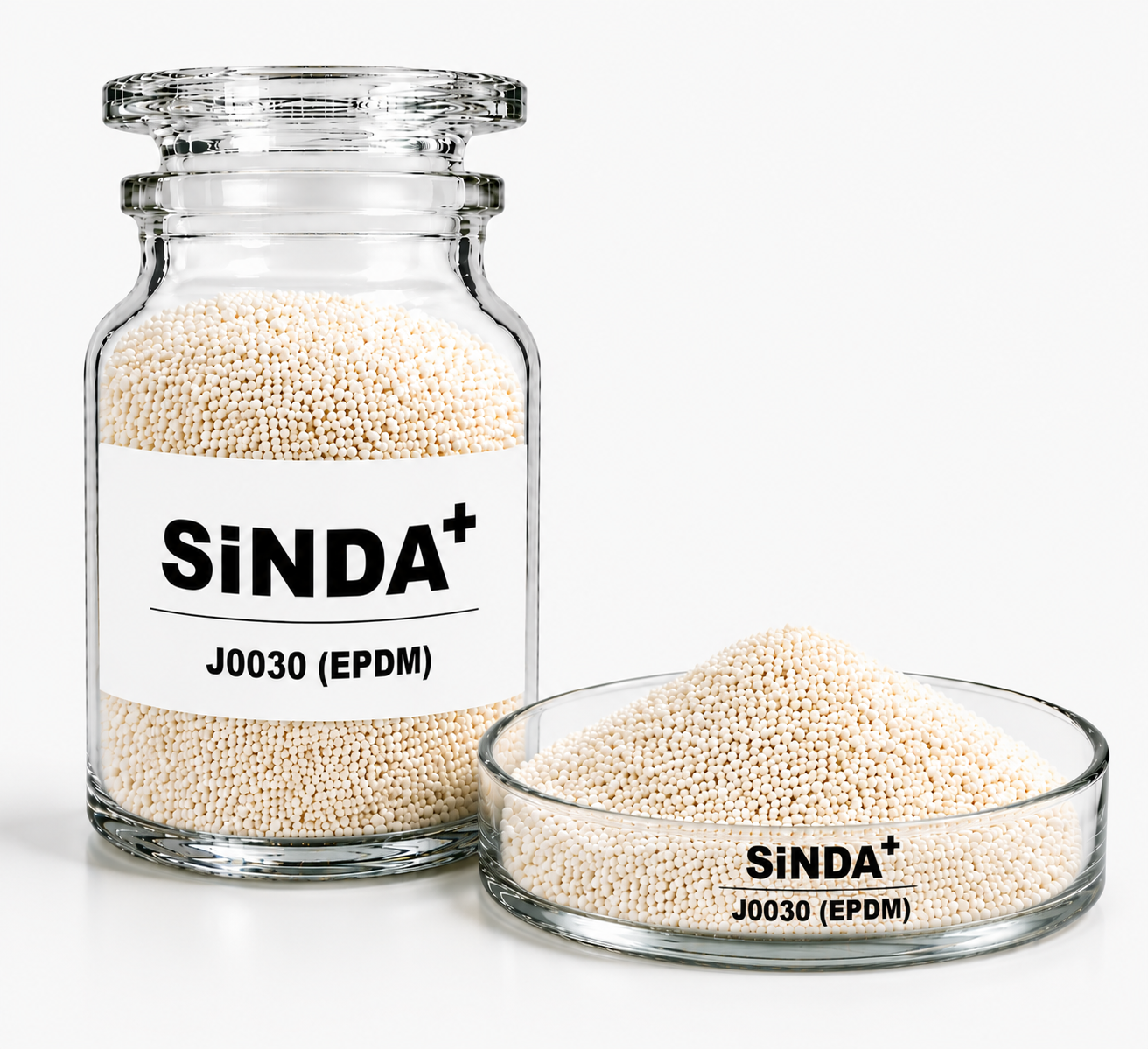
J-0030 EPDM
J-0030 Ethylene Propylene Diene Rubber (EPDM) supplied by SiNDA as an industrial raw polymer for viscosity index improver manufacturing, supported by available technical documentation and commercial shipment information.
- Polymer Type
- Application
- Packaging
- Open this page on mobile
Product Overview
J-0030 EPDM is a base polymer used in the production of olefin copolymer viscosity index improvers, where performance and manufacturing consistency depend significantly on polymer quality and processing characteristics. Stable polymer characteristics, controlled manufacturing conditions, and available technical documentation are therefore important considerations for lubricant additive manufacturers.
J-0030 EPDM is an Ethylene Propylene Diene Rubber (EPDM) manufactured by PetroChina Jilin Petrochemical Branch and supplied by SiNDA for evaluation as a raw polymer in the manufacture of olefin copolymer viscosity index improvers and related lubricant polymer products.
Unlike binary EPM polymers, EPDM contains a controlled diene component that distinguishes it from conventional binary ethylene–propylene rubber grades. Its molecular characteristics are intended to support industrial polymer processing, dissolution, and subsequent modification processes used by manufacturers of lubricant viscosity modifiers.
J-0030 is manufactured under controlled production conditions to provide consistent batch characteristics for downstream processing. Actual processing behavior, dissolution performance, viscosity-building efficiency, and finished viscosity modifier properties depend on the customer’s production technology, operating temperature, polymer concentration, processing sequence, and target product specifications.
J-0030 is not a finished viscosity index improver and should not be added directly to finished engine oils or industrial lubricants. It is an industrial raw polymer requiring further processing before use in a commercial lubricant formulation.
Available manufacturer and supplier documentation may include information on composition, Mooney viscosity, volatile matter, ash content, appearance, and other product-related parameters. This documentation helps customers evaluate the material against their internal procurement, processing, and quality-control requirements.
Through documented sourcing, commercial shipment traceability, and international supply capability, SiNDA provides J-0030 EPDM to manufacturers developing viscosity modifier polymers for automotive and industrial lubricant applications.
Key Benefits
- Ethylene Propylene Diene Rubber (EPDM) for lubricant polymer production
- Suitable raw material for viscosity index improver manufacturing
- Controlled polymer composition and processing characteristics
- Consistent batch characteristics for processing evaluation
- Available technical and commercial documentation
- Suitable for downstream polymer dissolution and modification
- Intended for automotive and industrial lubricant additive production
- Commercial shipment traceability
- Supported by SiNDA technical documentation and international supply
Operational Applications
J-0030 EPDM is intended as a raw polymer for manufacturers producing viscosity index improvers and specialized lubricant polymer products.
Typical applications include:
- Olefin Copolymer viscosity index improver production
- Engine oil polymer manufacturing
- Raw material for automotive lubricant additive production
- Raw material for industrial lubricant additive production
- Multigrade lubricant polymer manufacturing
- Polymer concentrate production
- Polymer processing for viscosity modifier manufacturing
- Specialty viscosity modifier development
- Modified lubricant polymer production
The suitability of J-0030 should be evaluated according to the customer’s processing equipment, dissolution procedure, target polymer concentration, manufacturing conditions, and finished viscosity modifier requirements.
Technical Overview
J-0030 is an Ethylene Propylene Diene Rubber (EPDM) developed for industrial polymer-processing applications, including the production of viscosity modifier materials for the lubricant industry.
Unlike binary EPM, EPDM contains an additional diene component within the polymer structure. This controlled unsaturation can influence polymer processing, modification capability, molecular behavior, and compatibility with downstream manufacturing technologies.
When used as a raw material for viscosity index improver production, J-0030 must first undergo appropriate processing and dissolution. The finished viscosity modifier’s thickening efficiency, shear behavior, viscosity contribution, and base-oil compatibility depend on the complete manufacturing process rather than the raw polymer alone.
J-0030 is produced with controlled polymer characteristics and may be supplied with manufacturer or supplier documentation covering relevant product parameters. Depending on the current specification or batch inspection report, these parameters may include:
- Appearance
- Mooney viscosity
- Ethylene content
- Diene content or diene type
- Volatile matter
- Ash content
- Polymer composition
- Other manufacturer-controlled properties
Actual specification limits should be confirmed against the current manufacturer documentation and batch-specific inspection results.
Quality Characteristics
Controlled Polymer Composition
The performance of EPDM during viscosity modifier manufacturing depends on several polymer characteristics, including molecular weight, molecular-weight distribution, ethylene-to-propylene ratio, diene content, and Mooney viscosity.
Controlled polymer composition can support:
- More consistent processing behavior
- Repeatable dissolution evaluation
- Stable production assessment
- Support downstream polymer modification processes
- Better visibility into raw-material quality
The finished viscosity modifier performance must still be confirmed through the customer’s own production trials and laboratory evaluation.
Batch Quality Evaluation
Production batches are evaluated according to the manufacturer’s applicable quality-control procedures before commercial shipment.
Typical parameters may include:
- Physical appearance
- Mooney Viscosity ML (1+4) at 100°C
- Ethylene content
- Diene content or diene type
- Volatile matter
- Ash content
These parameters help lubricant additive manufacturers assess whether the raw polymer is suitable for their processing system and finished product targets.
Reliable Raw Material Consistency
Consistent polymer properties are important for manufacturers producing viscosity index improvers where dissolution behavior, process control, and product uniformity are critical.
Consistent batch characteristics can support:
- Predictable polymer handling
- Stable production evaluation
- More consistent dissolution behavior
- More consistent manufacturing evaluation
- Reliable product-development trials
- Improved raw-material qualification
The level of consistency should be assessed using the current product specification and batch documentation.
Technical Documentation
SiNDA supplies J-0030 with available technical and commercial documentation to support product evaluation and procurement.
Documentation may include:
- Technical Data Sheet
- Safety Data Sheet
- Inspection documentation, where available
- Batch quality information
- Storage and handling recommendations
- Commercial shipment documents
- Export documentation
Document availability may vary by production batch, manufacturing source, destination market, and customer requirements.
Compatibility & Industrial Use
J-0030 EPDM is an industrial raw polymer and is not intended for direct addition to finished lubricants.
Following suitable processing, the resulting viscosity modifier may be evaluated for use in lubricant formulations such as:
- Passenger Car Motor Oils
- Heavy-Duty Diesel Engine Oils
- Multigrade Engine Oils
- Hydraulic Oils
- Industrial Hydraulic Fluids
- Industrial Gear Oils
- General Industrial Lubricants
- Specialty Lubricant Formulations
Compatibility with Group I, Group II, Group III, or synthetic base stocks cannot be determined solely from the raw EPDM grade. It depends on the polymer-processing method, carrier oil, polymer concentration, molecular modification, and final viscosity modifier composition.
The performance of the finished lubricant also depends on the complete base-oil system, viscosity modifier dosage, formulation technology, and final performance requirements.
Processing Considerations
J-0030 must be processed under controlled manufacturing conditions before it can function as a lubricant viscosity modifier.
Manufacturers should evaluate:
- Polymer cutting or preparation requirements
- Dissolution temperature
- Mixing and circulation conditions
- Processing time
- Carrier-oil selection
- Polymer concentration
- Thermal exposure
- Filtration requirements
- Finished concentrate viscosity
- Storage stability after processing
Excessive temperature, insufficient mixing, localized overheating, or unsuitable carrier-oil solvency may affect dissolution quality and finished product consistency.
Processing conditions should therefore be established through laboratory and pilot-scale trials before commercial production.
Selection Guidance
J-0030 EPDM may be suitable for manufacturers seeking:
- EPDM raw polymer for viscosity modifier production
- Controlled polymer composition
- Consistent industrial processing characteristics
- Documented raw-material sourcing
- Commercial shipment traceability
- Technical information for supplier evaluation
- Raw polymer for modified viscosity modifier production
- International supply support
Before commercial use, customers should evaluate J-0030 according to:
- Target viscosity modifier chemistry
- Required polymer concentration
- Manufacturing process
- Carrier-oil solvency
- Required thickening efficiency
- Target shear performance
- Finished concentrate viscosity
- Final lubricant application
- Internal quality-control requirements
Product suitability should be established through the customer’s own processing trials and finished-product testing.
Compliance & Technical Documentation
SiNDA supplies J-0030 EPDM with available documentation to support industrial evaluation, supplier qualification, and commercial procurement.
The available documentation may provide information related to:
- Product identification
- Polymer classification
- Batch-controlled quality parameters
- Storage and handling
- Commercial shipment traceability
- Export and logistics requirements
Published or supplied typical values should not be interpreted as guaranteed specifications unless confirmed in the current manufacturer specification or batch-specific quality documentation.
Why Choose SiNDA
SiNDA supplies documented polymer raw materials for lubricant additive manufacturers through qualified international sourcing channels.
Key advantages include:
- Documented J-0030 EPDM supply
- Available manufacturer and supplier documentation
- Consistent product sourcing
- Commercial shipment traceability
- Technical support for product evaluation
- International sourcing and logistics capability
- Support for lubricant polymer manufacturers
- Responsive RFQ and commercial assistance
- SiNDA commercial packaging solutions where applicable
SiNDA’s role is to support customers with product access, documentation, commercial coordination, and technical communication. Final manufacturing suitability remains subject to the customer’s own production and quality evaluation.
Frequently Asked Questions
What is J-0030 EPDM?
J-0030 is an Ethylene Propylene Diene Rubber supplied as an industrial raw polymer for further processing, including the manufacture of olefin copolymer viscosity index improvers.
Is J-0030 a ready-to-use lubricant additive?
No. J-0030 is a solid raw polymer and should not be added directly to finished engine oils, hydraulic fluids, or industrial lubricants.
What is the difference between J-0030 EPDM and J-0010 EPM?
J-0010 EPM is based primarily on ethylene and propylene, while J-0030 EPDM also contains a controlled diene component. The diene influences polymer structure and may provide additional processing or modification possibilities.
Can J-0030 be used to produce viscosity index improvers?
Yes. J-0030 may be evaluated as a raw polymer for producing OCP-based or modified viscosity index improvers. Final suitability depends on the customer’s processing technology and target product specifications.
Which technical parameters should be evaluated?
Relevant parameters may include:
- Mooney viscosity
- Ethylene content
- Diene type and content
- Volatile matter
- Ash content
- Molecular-weight characteristics
- Dissolution behavior
- Finished concentrate viscosity
Is J-0030 compatible with Group I, Group II, and Group III base oils?
Compatibility cannot be confirmed from the raw polymer alone. It depends on the processing method, polymer concentration, carrier oil, and final viscosity modifier formulation.
What documentation is available?
Depending on the production batch and supply arrangement, available documents may include a TDS, SDS, inspection documentation, batch information, storage guidance, and commercial shipment documents.
Who supplies J-0030?
J-0030 is supplied internationally by SiNDA. Manufacturer information, where applicable, should be confirmed using the documentation supplied with the product.
Technical Information
Published reference specifications require confirmation against the current manufacturer TDS and shipment COA. Confirm the Mooney test temperature, acceptance ranges, physical form and packaging for the purchased grade.
| Property | Test Method | Typical Value / Specification |
| Product Name | — | J-0030 EPDM |
| Product Type | — | Ethylene Propylene Diene Rubber (EPDM) |
| Polymer Classification | — | Solid Amorphous EPDM Polymer |
| Primary Application | — | Raw Polymer for OCP Viscosity Index Improver Manufacturing |
| Commercial Brand | — | SiNDA |
| Manufacturer | Manufacturer Documentation | Qualified International Manufacturing Partner |
| Supplier & Distributor | — | SiNDA |
| Physical Form | Visual | Solid Polymer Bale / Block |
| Appearance | Visual | White to Off-White Polymer, Free from Visible Impurities |
| Mooney Viscosity ML (1+4) @125°C | ASTM D1646 | 25–35 MU |
| Ethylene Content | Manufacturer Method | 50–55 wt.% |
| Diene Content (ENB) | Manufacturer Method | 4.5–6.5 wt.% |
| Volatile Matter | ASTM D5668 / Manufacturer Method | ≤0.50 wt.% |
| Ash Content | ASTM D5667 | ≤0.10 wt.% |
| Specific Gravity @23°C | ASTM D792 | 0.86–0.88 |
| Molecular Weight Distribution | GPC | Narrow |
| Oil Solubility | Internal Evaluation | Suitable for OCP Manufacturing |
| Processability | Internal Evaluation | Excellent |
| Polymer Consistency | Manufacturer QC | Controlled Batch-to-Batch |
| Recommended Dissolution Oils | Formulation Evaluation | SN100, SN150, SN500 Mineral Base Oils |
| Recommended Applications | — | OCP Viscosity Index Improvers, Engine Oil Polymers, Lubricant Additives |
| Packaging | Supplier Declaration | 25 kg Bale / SiNDA Commercial Packaging |
| Storage Conditions | — | Store in a Dry, Cool and Well-Ventilated Area |
| Shelf Life | Original Sealed Packaging | 24 Months |
Select J-0030 EPDM using current polymer specifications and validated processing trials. Contact SiNDA for TDS, SDS, shipment COA, samples, availability, packaging and quotation.
For direct and secure purchases with guaranteed quality, contact our experts now and benefit from free consultation.