
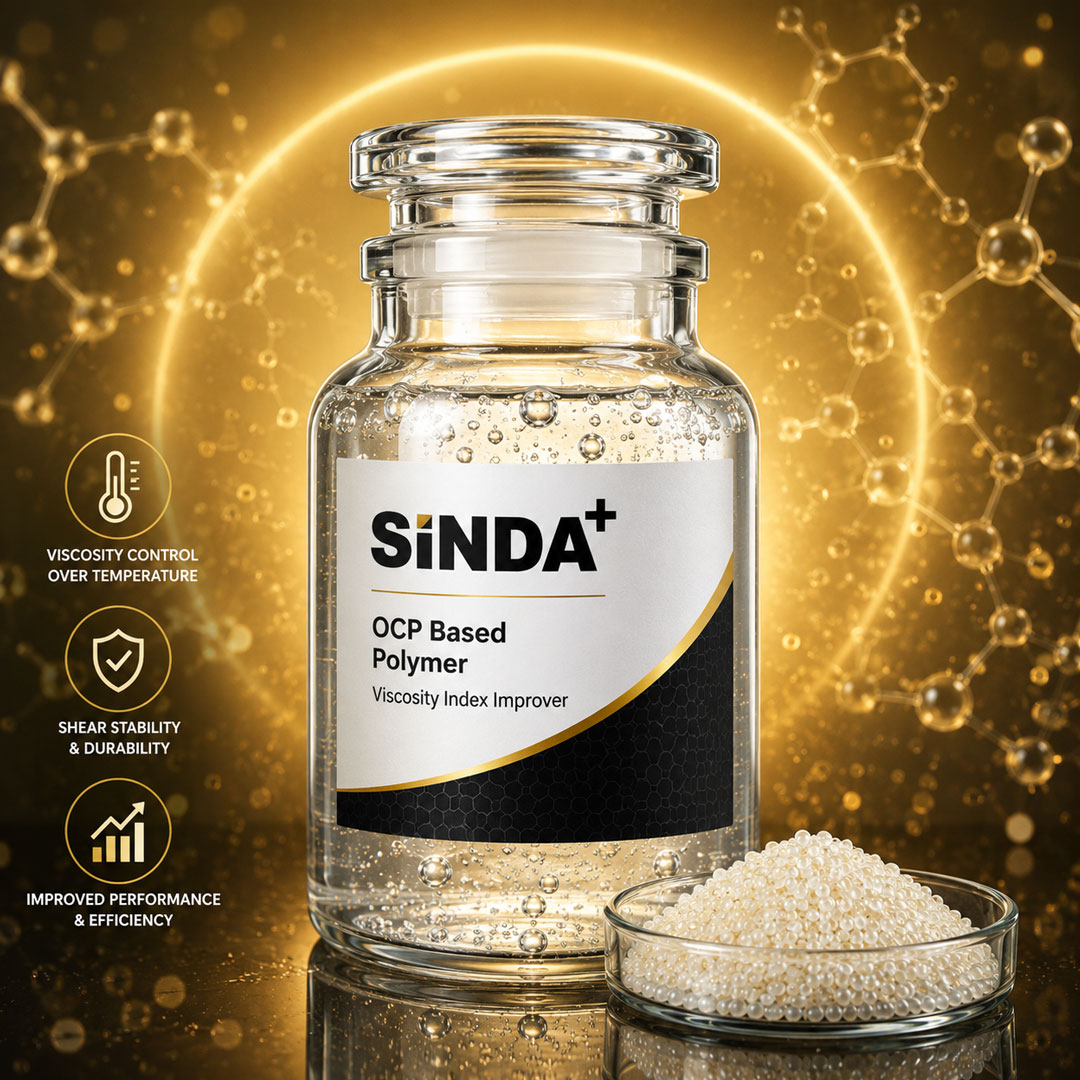
OCP Based Polymers
OCP based polymers are oil-soluble olefin copolymers used to control viscosity-temperature behaviour in multigrade and viscosity-sensitive lubricants. At SiNDA, we help lubricant formulators evaluate OCP grades by declared polymer chemistry, thickening efficiency, shear stability, physical form, dissolution requirements and response in the intended base-oil system. Our technical-commercial process connects these formulation requirements with grade documents, sample discussions and supply options for the UAE and export markets.
- Open this page on mobile
Product Overview Modern lubricant manufacturers require viscosity index improvers that…
Product Overview Modern lubricant manufacturers require viscosity index improvers that…
Product Overview Modern lubricant manufacturers require viscosity index improvers that…
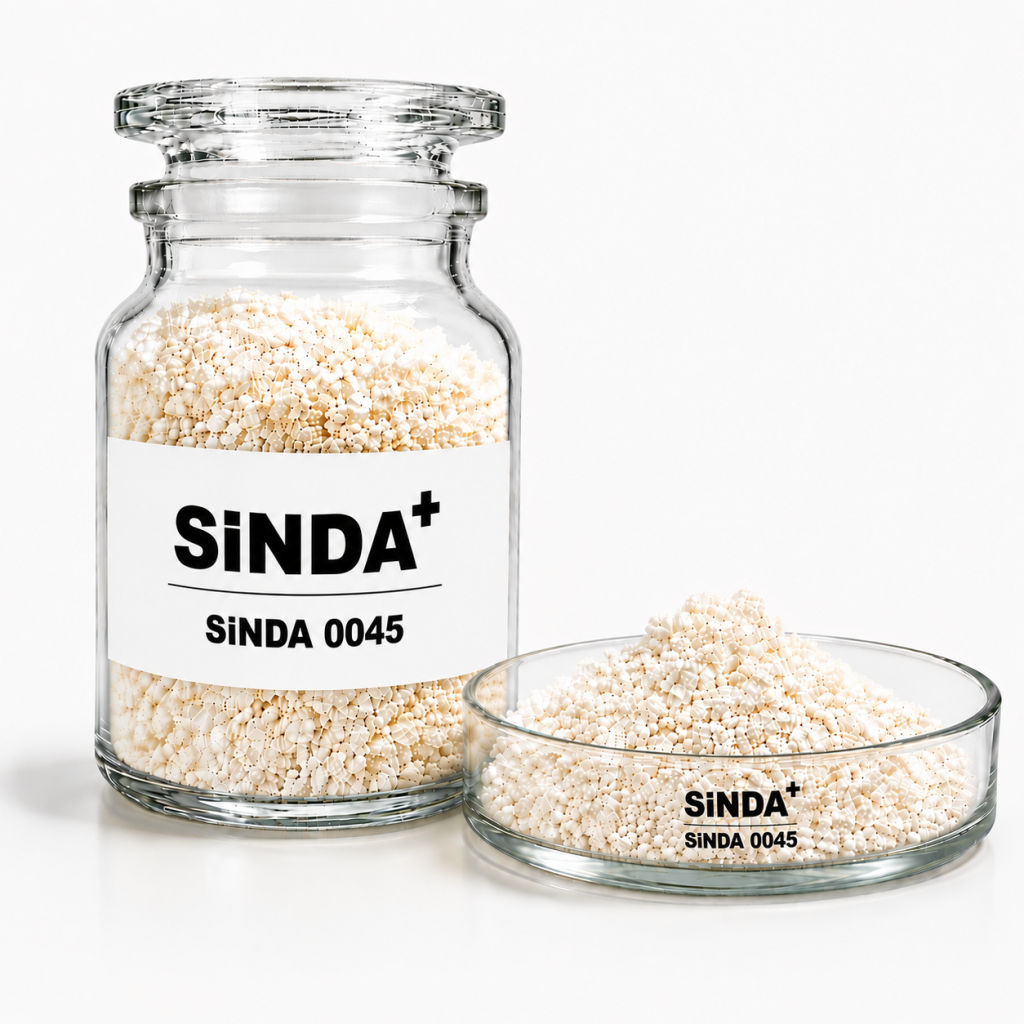
Product Overview Modern lubricant manufacturers require viscosity index improvers that…
OCP Based Polymers overview
OCP stands for olefin copolymer, a broad family of oil-soluble polymers used as viscosity index improvers in formulated lubricants. These polymers reduce the rate at which lubricant viscosity falls as temperature rises, supporting multigrade and viscosity-sensitive products. Finished-oil performance still depends on the base oils, additive package, polymer concentration, shear exposure and low-temperature requirements.
Many lubricant OCP grades use ethylene-propylene structures. Documentation may identify EPM, EPDM or another architecture, but the identity must be confirmed from the TDS or manufacturer declaration rather than inferred from a model number. OCP based polymers sit within SiNDA’s wider Viscosity Index Improvers & Lubricant Polymers portfolio.
Browse OCP polymer routes
Choose the route that matches the active portfolio, intended lubricant and available evidence. SiNDA can organise discussions around branded series, declared chemistry, shear-stability positioning and processing form.
| OCP route | Selection focus |
| SiNDA OCP Series | SiNDA-branded OCP grades organised by documented form and formulation route. |
| PetroChina OCP Series | Available PetroChina OCP grades evaluated through grade-level evidence. |
| EPM Based OCP | Grades documented as ethylene-propylene copolymers. |
| EPDM Based OCP | Grades with supplier-confirmed EPDM architecture. |
| High Shear Stable OCP | Grades compared using equivalent shear methods and blend conditions. |
| Hydrogenated OCP | A conditional route requiring active grades and supporting documents. |
High molecular weight OCP and high VI OCP may also be relevant when supported by an active grade list. Treat these as selection characteristics, not proof of a specific molecular weight, viscosity-index result or application claim.
Chemistry and molecular architecture
An olefin copolymer viscosity modifier is not defined by the letters OCP alone. Composition, molecular weight, molecular-weight distribution, architecture, crystallinity and physical form can change how a grade dissolves, thickens oil and responds to shear. Two grades from the same family can therefore behave differently in the same base oil.
Confirm whether the supplier declares EPM, EPDM or another chemistry and whether the grade is supplied as a bale, pellet, crumb, granule or liquid concentrate. These details affect handling and processing, but they do not replace blend testing in the intended base-stock system.
Thickening efficiency and shear stability
Thickening efficiency describes how effectively a polymer raises viscosity under defined blend conditions. An efficient grade may reach a target viscosity at a lower concentration, but the result depends on base-oil viscosity, temperature and formulation target. Treat rate should be a documented starting point followed by laboratory validation.
Shear stability concerns viscosity contribution after mechanical stress. Polymer architecture creates a balance: strong thickening does not always provide the same resistance to permanent shear as a lower-molecular-weight or differently designed grade. The required balance changes between engine, hydraulic, gear and transmission applications.
How to interpret SSI and PSSI
SSI and PSSI describe permanent viscosity loss associated with polymer shear, but a value is meaningful only with its test method, reference oil or formulation, polymer concentration and calculation basis. Do not compare values produced by different methods as if they were equivalent. Request the full test context and, where possible, pre-shear and post-shear viscosity data. Our guide to SSI and PSSI in viscosity improvers provides further context.
Low-temperature and viscosity performance
OCP selection must support the complete viscosity profile, not only kinematic viscosity at 100°C. CCS, MRV, Brookfield viscosity and pour point are finished-oil properties that can change with the base-oil mix, polymer architecture, pour point depressant, additive package and treat rate.
For an OCP polymer for engine oil, request blend data relevant to the intended SAE grade and base-stock system. For hydraulic, gear or transmission fluids, use the tests and temperature limits appropriate to that formulation. No polymer family automatically guarantees a viscosity grade, OEM claim, fuel-economy result or cold-performance level.
Polymer form, dissolution and processing
Solid OCP products may be supplied as bale, pellet, crumb or granule forms, while other grades arrive as pre-dissolved concentrates or liquids. Form affects storage, dosing, mixing time and plant workflow.
Dissolution conditions must be grade specific. Base-oil solvency, polymer size, batch size, agitation, heat-transfer capacity, addition sequence and supplier thermal limits all matter. A universal temperature or mixing time may create quality or safety problems. Follow the processing guide and SDS, then confirm the method through a controlled trial. The OCP polymer dissolution guide explains the information to collect before processing begins.
Base-oil compatibility and target applications
Compatibility must be verified in the actual formulation. Group I, Group II, Group III, PAO, ester and mixed base-stock systems may produce different solubility, haze, storage-stability or filterability results. Other additives can also change the final behaviour.
OCP based polymers may be evaluated for multigrade engine oils, hydraulic fluids, industrial and automotive gear oils, transmission fluids and selected specialty lubricants. Suitability is grade specific; a grade that works in one engine-oil blend may not suit an industrial fluid with different shear, low-temperature or cleanliness requirements.
7 checks for choosing an OCP viscosity index improver supplier
| Selection check | What to confirm | Why it matters | Evidence |
| 1. Polymer identity | Declared OCP, EPM, EPDM or other architecture | Explains chemistry and formulation behaviour | TDS or manufacturer declaration |
| 2. Thickening efficiency | Blend conditions, concentration and viscosity response | Supports treat-rate evaluation | TDS or blend study |
| 3. SSI/PSSI context | Method, reference blend and concentration | Prevents invalid value comparisons | TDS or test report |
| 4. Low-temperature validation | CCS, MRV, Brookfield or pour-point data | Confirms finished-oil response | Formulated-oil results |
| 5. Product form | Bale, pellet, crumb, granule, concentrate or liquid | Affects handling and dissolution | TDS and processing guide |
| 6. Compatibility | Base stocks, additive package, clarity and stability | Reduces formulation risk | Compatibility study |
| 7. Documents and supply | TDS/SDS, packaging, MOQ, lead time and traceability | Supports repeatable approval and supply | Current confirmation |
Compare candidate grades in the same base oil, at documented concentrations, under the same test methods and against the same viscosity and shear targets. This prevents a headline value generated under different conditions from controlling the decision.
OCP, PMA/PAMA and specialty systems
OCP, PMA/PAMA and styrenic systems are broad families, not fixed performance levels. OCP is often evaluated for its balance of thickening, shear response and processing practicality. PMA Based Polymers may be considered where low-temperature contribution, liquid delivery or additional functionality is central. Styrenic Block Copolymers may suit selected rheology targets when grade data supports the application.
Available grades and technical documents
Before requesting a sample or quotation, share the application, base oils, target viscosity or SAE/ISO objective, required shear method, low-temperature limits, preferred product form, batch size, annual volume and destination. For each shortlisted grade, confirm declared polymer identity, physical form, TDS and SDS, SSI or PSSI method where stated, processing guidance, packaging, minimum order quantity, lead time and traceability. This allows an OCP viscosity index improver supplier to connect technical selection with practical supply.
| Discuss your OCP formulation requirements |
| Request a grade discussion, technical documents, sample evaluation or quotation. Share the application, base-oil system, target viscosity profile, shear and low-temperature requirements, preferred polymer form, estimated volume and destination with the SiNDA team. |
Frequently asked questions
What are OCP based polymers?
OCP based polymers are olefin copolymers used as viscosity index improvers or viscosity modifiers in lubricants. Their exact chemistry, architecture, physical form and performance are grade specific and should be confirmed from supplier documentation.
How do OCP viscosity improvers differ from PMA/PAMA polymers?
They use different polymer chemistries and can offer different balances of thickening, shear stability, low-temperature contribution, functionality and processing form. Neither family is automatically superior; compare grade-specific data in the intended base-oil and additive system.
What do SSI and PSSI tell me?
SSI and PSSI describe permanent viscosity loss after defined shear testing. Read the result with the method, formulation or reference oil, concentration and calculation basis. Values from different methods are not automatically comparable.
How is solid OCP polymer dissolved?
The procedure depends on the exact grade, form, base oil, batch size, agitation and supplier thermal limits. Follow the grade-specific processing guide and SDS, and validate the method through a controlled trial.
Which base oils and applications require testing?
Every proposed formulation requires validation. Mineral, Group II, Group III, PAO, ester and mixed systems can respond differently, while additive-package interactions may affect solubility, storage stability, shear retention and low-temperature performance.
What information should I send for a quotation?
Send the application, target viscosity or grade, base-oil system, required tests, preferred polymer form, estimated annual volume, packaging needs and delivery destination. This enables a more relevant grade and document discussion.
Select OCP polymers through comparable evidence
The most dependable OCP decision combines chemistry, thickening efficiency, shear stability, low-temperature validation, processing practicality and supply. SiNDA helps formulators move from an initial requirement to a documented shortlist, sample discussion and quotation. Start with the formulation and test targets, then confirm the exact grade through its TDS, SDS, blend work and technical review.