
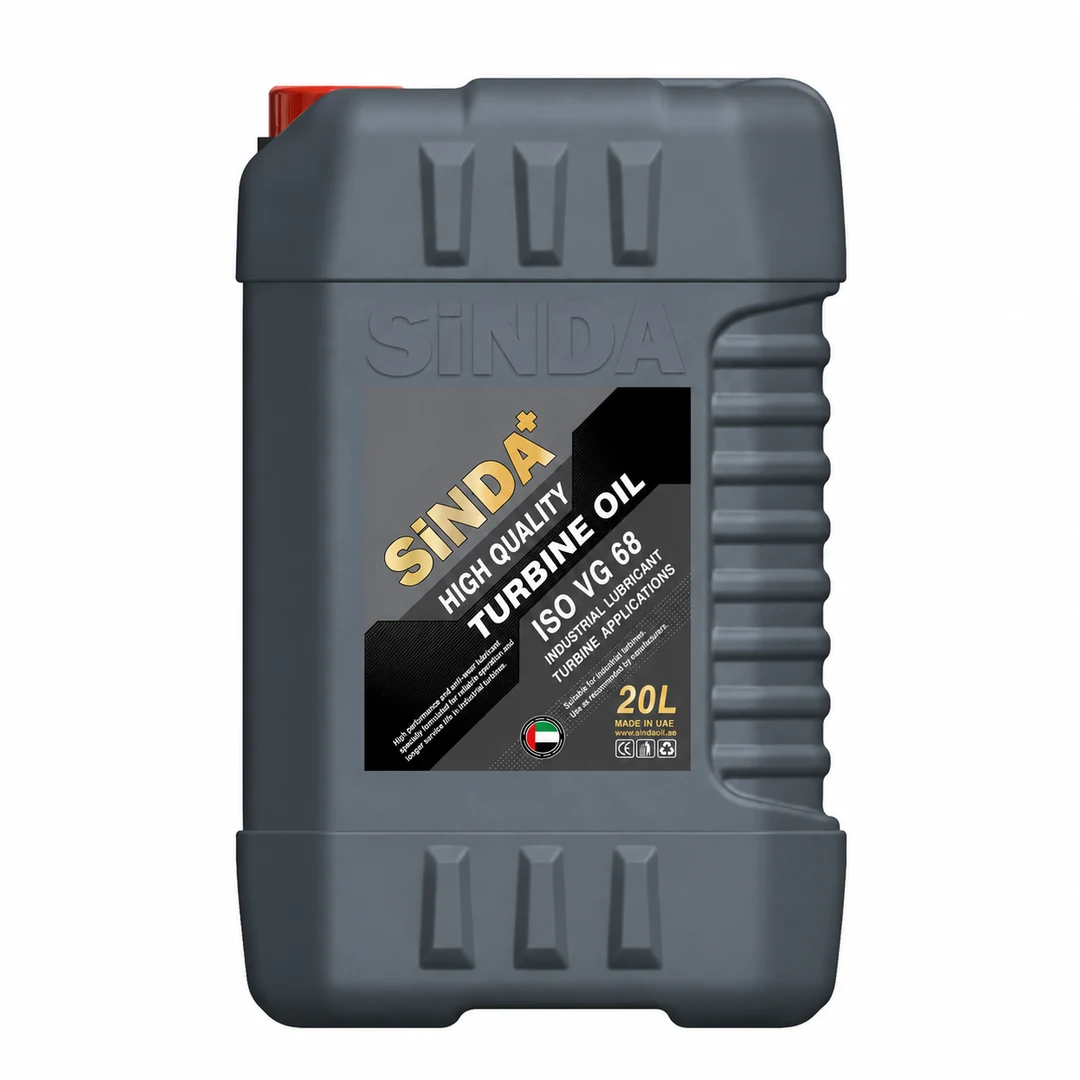
Turbine Oil 68
Turbine Oil 68 supports turbine and circulation duties requiring ISO VG 68. Confirm bearing requirements, oil distribution and startup viscosity before selecting this heavier grade for continuous industrial service.
- Product Type
- Key Performance
- Application
- Open this page on mobile
Product Overview
We offer Turbine Oil 68 for industrial equipment requiring an ISO VG 68 turbine lubricant. The higher viscosity compared with VG 32 or VG 46 can meet the film requirements of appropriately designed systems, while also changing startup resistance and circulation behaviour.
This makes equipment-specific selection important. The grade is not a general solution for worn bearings, high ambient temperature or a noisy lubrication system.
A complete technical assessment combines operating viscosity with oxidation performance, corrosion protection, water separation, air release and any additional requirements from gears or control components.
Operational Applications
Evaluate Turbine Oil 68 for compatible turbine bearings and circulation circuits whose manufacturer specifies this grade and the selected formulation’s performance level.
Some industrial bearing systems may also use a turbine-type oil. Confirm the load, speed, lubrication arrangement and any separate gear requirement before extending the product to another application.
The relevant industrial lubricants route depends on the component being lubricated.
For UAE plant enquiries, include startup temperature as well as normal oil temperature. A machine that operates hot can still experience demanding oil-delivery conditions during startup.
Performance Characteristics
Bearing-film support: Correct viscosity contributes to the intended film under the specified bearing conditions. Supply pressure and flow must also reach the required values.
Startup circulation: Higher viscosity increases resistance in the lubrication circuit. Confirm the pump’s operating limits, filter behaviour and delivery to remote points during initial running.
Contamination handling: Water and entrained air can disturb lubrication independently of viscosity. Good monitoring distinguishes a fluid-selection issue from ingress, aeration or reservoir-design problems.
Long-term condition: Oxidation products and contamination can change oil behaviour over time. Track trends using consistent sampling and methods appropriate to the system.
Compatibility & Limitations
Do not assume Turbine Oil 68 provides the same extreme-pressure performance as industrial Gear Oil 68. The two product families can have different additive systems and intended duties.
Likewise, a turbine oil is not automatically suitable for every hydraulic system using VG 68. Pump requirements, cleanliness and additive compatibility must be reviewed.
Specialised gas-turbine, aeroderivative and fire-resistant control-fluid applications require their own specification-based selection.
Before converting a large reservoir, evaluate the existing oil, compatibility and deposit condition. Plan the changeover with the equipment requirements and establish a fresh-oil baseline for future monitoring.
Turbine Oil 68 Selection Guidance
Choose this grade when the OEM requirement identifies ISO VG 68 and the selected formulation meets the relevant turbine or circulation specification.
For example, an industrial turbine may use VG 68 in its bearing circuit while a separate control system uses a fire-resistant fluid. Treating both reservoirs as one lubricant requirement can create a serious compatibility problem. Identify the reservoirs and their functions before placing the order.
Use one clear rule: match the lubricant to each circuit.
For a technical RFQ, include:
- Turbine model and application.
- Bearing, gearbox and control-system arrangement.
- Required viscosity and performance specification.
- Existing product and reservoir capacities.
- Startup temperature, normal oil temperature and duty cycle.
- Required documents, quantity and supply destination.
Compliance & Standards
ISO 3448 defines the viscosity class. ISO 8068, DIN 51515 and machine-builder specifications can provide additional performance requirements.
Approval status belongs to the exact product and formulation. A supplier’s general turbine-oil range or another brand’s approval does not establish compliance for the proposed fill.
Industrial FAQ
Is VG 68 the best choice for a hot turbine?
Only when the equipment’s viscosity guidance and actual operating conditions support it.
Can this oil serve a gearbox connected to the turbine?
Check whether the shared system requires additional gear or anti-wear performance.
Will a heavier oil correct low lubrication pressure?
Investigate pump condition, clearances, leakage and temperature first. Changing viscosity can conceal the cause without resolving it.
Technical Specifications
| Selection parameter | Reference |
|---|---|
| Viscosity grade | ISO VG 68 |
| Nominal viscosity at 40°C | 68 mm²/s |
| Classification band at 40°C | 61.2–74.8 mm²/s |
| Viscosity measurement | ASTM D445 |
| Key application inputs | Bearing design, speed, load and oil temperature |
| Circulation assessment | Pump, filters, distribution and return flow |
The classification band does not establish measured viscosity for a particular batch. Use the selected formulation’s documentation for physical properties and stated performance.
A viscosity grade should never be interpreted as a temperature rating or load-capacity certification.
Turbine Oil 68 is the appropriate starting point for a documented ISO VG 68 turbine or circulation requirement. Confirm startup delivery, bearing duty and any shared-system demands before purchase. Send your specification to SiNDA for technical evaluation and a Dubai, UAE or export quotation: +971 56 154 4177.
For direct and secure purchases with guaranteed quality, contact our experts now and benefit from free consultation.