
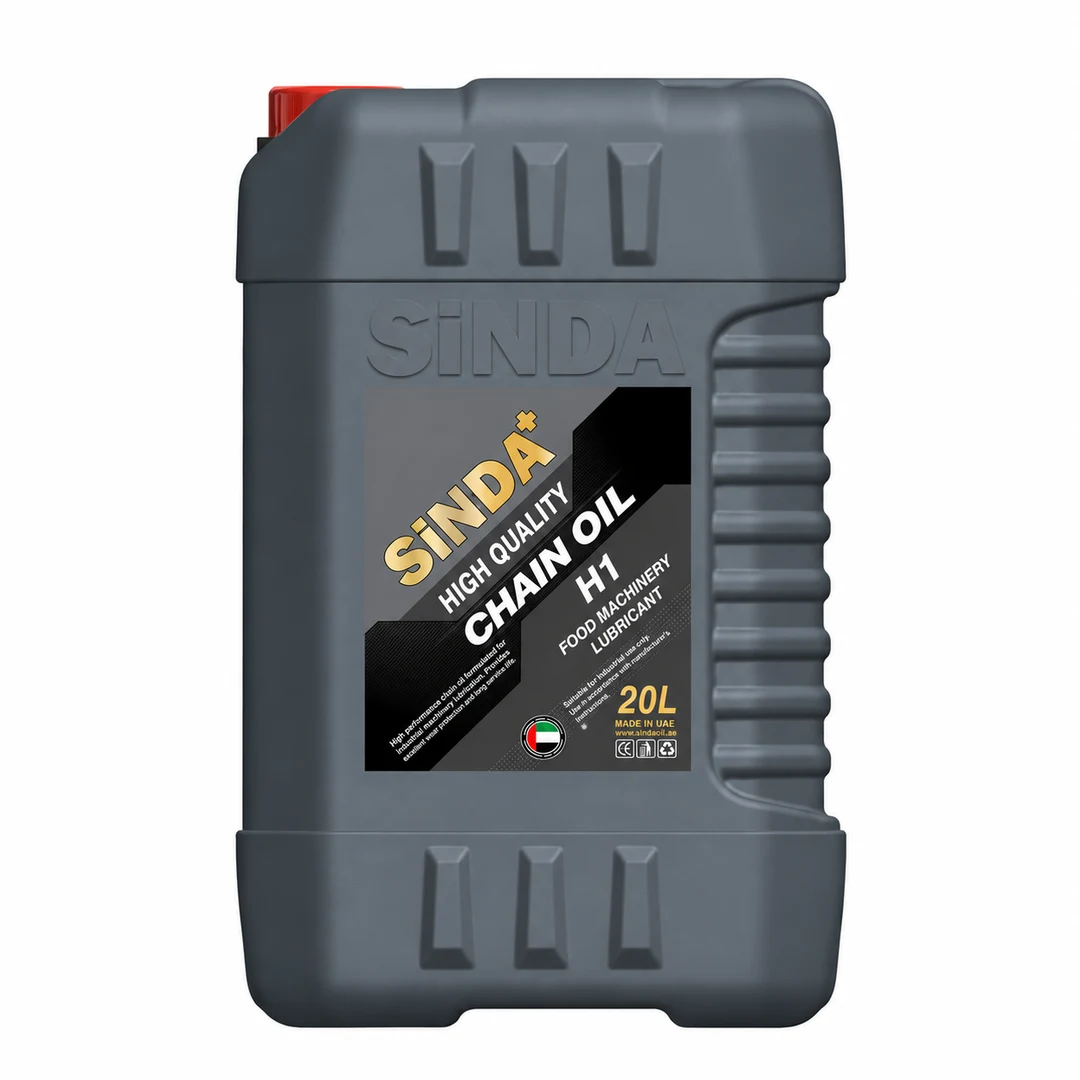
Chain Oil H1
Chain Oil H1 supports food-machinery chain lubrication where incidental contact must be considered. Match chain temperature, speed and lubricant delivery to the exact formulation so protection reaches the working contacts without unnecessary dripping or residue.
- Product Type
- Key Performance
- Application
- Open this page on mobile
Product Overview
We offer Chain Oil H1 enquiries for food and beverage equipment requiring a chain lubricant with an appropriate incidental-contact category.
The technical objective is to deliver lubricant to the contacts that experience movement, including pins, bushes and other specified interfaces. Coating only the outside of the chain may leave important working surfaces insufficiently lubricated.
H1 does not define viscosity or temperature capability. An ambient conveyor and a heated process chain can require substantially different formulations even where both applications need the same food-contact acceptance category.
Operational Applications
Relevant enquiries include compatible conveyor and drive chains in processing, packaging and other food-production equipment.
Identify whether the chain is unheated, exposed to washdown, used in a cold environment or operated through a heated zone. The operating temperature at the chain matters more than a general description of the room or oven.
Our industrial lubricants route provides the broader machinery selection.
For Dubai and UAE facilities, include chain speed, loading, relubrication access and the possibility of oil reaching food or packaging during operation.
Performance Characteristics
Penetration: The lubricant must reach the relevant contacts. Excessive viscosity or poor application can leave pins and bushes inadequately supplied.
Retention: Appropriate adhesion helps manage lubricant loss from a moving chain. Too much external oil can increase dripping or attract contamination without improving contact lubrication.
Temperature behaviour: Heated chains require a formulation suited to the actual exposure. Residue formation and evaporation should be evaluated for that duty.
Corrosion control: Washdown and moisture can affect chain condition. Lubrication practice must work together with cleaning, drying and inspection procedures.
Compatibility & Limitations
Do not assume Chain Oil H1 is suitable for oven chains merely because it belongs to an incidental-contact category. High-temperature capability must be documented separately.
An adhesive ambient-chain product may behave differently from a penetrating high-temperature formulation. Select the fluid for the application and delivery method.
H1 does not permit deliberate food contamination. Control leakage, overspray and application quantity according to the site’s hygiene procedures.
Check compatibility with chain materials, seals and any existing lubricant or cleaning residue. A planned changeover should consider deposits and the condition of the automatic lubrication system.
Chain Oil H1 Selection Guidance
Select the exact formulation from chain temperature, operating conditions and application method, then verify the required food-contact acceptance.
For example, an unheated packaging conveyor exposed to washdown may need a different balance of retention and water resistance from a chain passing through a heated production zone. Using one product solely because both labels say H1 can overlook the dominant operating requirement.
Use this simple rule: classify the chain duty before choosing the lubricant.
Send:
- Chain manufacturer, type and application.
- Actual chain temperature and exposure duration.
- Speed, load and running schedule.
- Lubrication method and metering equipment.
- Water, cleaning-chemical or contamination exposure.
- Current product and residue or wear observations.
- Required documents, quantity and destination.
Compliance & Standards
H1 registration and ISO 21469 certification should be verified independently where the site requires them for the exact product.
Neither establishes a universal chain-temperature rating. Any additional viscosity, material, equipment or performance requirement remains part of the technical selection. Halal, Kosher and other certification claims also require their own current evidence.
Industrial FAQ
Can one H1 chain oil serve ambient and oven chains?
Only where the exact formulation is documented for both operating duties.
Does more oil always improve chain protection?
No. Correct delivery to the working contacts matters more than excessive external coating.
Why can a chain look oily but still wear?
The oil may not reach pins and bushes, or the application interval and operating conditions may be unsuitable.
Technical Specifications
| Selection field | Required information |
|---|---|
| Chain design | Type, size and lubricated contacts |
| Temperature | Actual chain temperature and exposure time |
| Viscosity | Equipment and delivery-system requirement |
| Application | Drip, brush, bath or automatic system |
| Food-contact acceptance | Exact product documentation and permitted use |
| Operating environment | Water, cleaning chemicals, cold or heat |
The designation does not establish a universal high-temperature limit, evaporation rate or adhesion level.
Use the selected formulation’s data to compare these properties. Ambient and high-temperature chain oils should not be treated as one interchangeable product.
Chain Oil H1 selection combines contact penetration, temperature behaviour, application method and documented food-contact acceptance. Define the chain duty before approving the formulation. Contact SiNDA for technical evaluation and a supply quotation covering Dubai, the UAE or international food-processing operations: +971 56 154 4177.
For direct and secure purchases with guaranteed quality, contact our experts now and benefit from free consultation.