
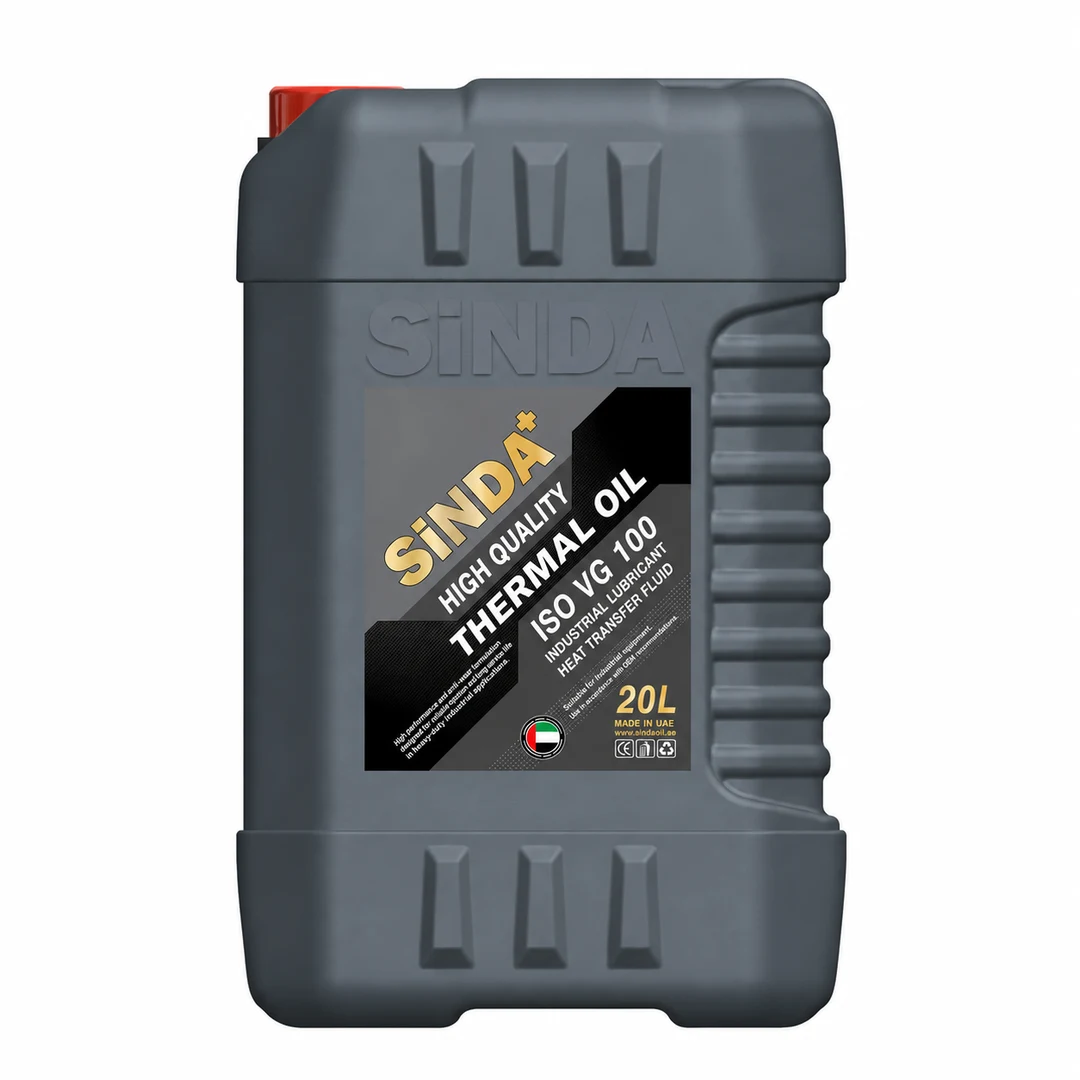
Thermal Oil 100
Thermal Oil 100 supports heating systems specifically requiring ISO VG 100. Assess circulation capability across the full temperature range before selecting this higher-viscosity fluid for an industrial thermal loop.
- Product Type
- Key Performance
- Application
- Open this page on mobile
Product Overview
We supply Thermal Oil 100 for industrial enquiries where the heating-system specification requires ISO VG 100. The grade’s higher viscosity makes startup circulation, pump capability and pressure drop particularly important selection inputs.
A higher grade number does not indicate a universally superior thermal fluid. The correct product must satisfy the circuit’s operating requirements without creating avoidable resistance or unsuitable heater conditions.
The assessment should identify the exact formulation, its thermal limits and its compatibility with the existing system. These factors determine suitability more reliably than matching a competitor’s product name.
Operational Applications
Evaluate this grade for compatible process-heating installations, heat exchangers, jacketed equipment and thermal-fluid circuits explicitly designed for the selected ISO VG 100 product.
Do not infer suitability from equipment size alone. A large heating plant can still require a lighter fluid, while a particular system may specify a heavier grade for its own design reasons.
Our industrial lubricants route supports selection by application.
For UAE enquiries, describe production schedules, shutdown duration, exposed pipework and the temperature at which the circulation pump must start.
Performance Characteristics
Circulation capability: The system must deliver sufficient flow through the heater and process equipment. Higher viscosity can affect both pump demand and distribution through parallel circuits.
Heat-transfer control: Useful heating depends on flow and the fluid’s thermal properties. A heavier oil does not automatically improve heat-transfer efficiency.
Thermal degradation: Excessive local temperature can deteriorate the fluid near heated surfaces. Maintaining flow and respecting the formulation’s limits helps manage this risk.
Condition monitoring: Trend relevant properties alongside operating records. Changes in heating time, pressure drop or fluid condition can provide evidence of fouling, contamination or degradation requiring investigation.
Compatibility & Limitations
Do not use Thermal Oil 100 to compensate for a leaking system, inadequate heater capacity or unexplained process-temperature variation.
Avoid replacing a lighter specified fluid without reviewing the pump and heater design. A higher cold viscosity can reduce circulation at the moment heat input begins.
Thermal Oil 100 should not be assumed equivalent to a hydraulic, gear or compressor oil of the same grade.
Check existing-fluid chemistry, seals, gaskets and deposits before conversion. Specialised thermal fluids and food-contact applications require their own documentation, and the permitted use must match the actual process arrangement.
Thermal Oil 100 Selection Guidance
Choose this grade when the equipment design requires ISO VG 100 and the selected formulation meets the thermal operating envelope.
For example, replacing VG 32 with VG 100 in a small temperature-control unit can increase startup pressure drop and reduce flow through narrow passages. The higher viscosity may create a worse heater condition despite appearing to offer a heavier protective fluid.
Use a straightforward selection principle: retain the designed viscosity unless a documented engineering assessment supports a change.
An enquiry should include:
- Heater, circulation pump and process details.
- Required viscosity or permitted viscosity range.
- Minimum startup and maximum bulk temperatures.
- Film-temperature or heater-design requirement.
- Current fluid and condition-analysis results.
- Known fouling, leakage or circulation problems.
- Fill volume, preferred packs and destination.
Compliance & Standards
ISO 3448 defines the viscosity grade. Physical-property tests such as ASTM D445 provide a common measurement basis.
Application suitability additionally requires documented thermal limits and equipment compatibility. A published flash point is not a continuous-use temperature, and an ISO viscosity grade does not constitute a heat-transfer-system approval.
Industrial FAQ
Is VG 100 the highest-temperature thermal-oil option?
The grade does not establish temperature capability. Compare formulation-specific limits.
Can it replace an existing mineral thermal fluid?
Check the exact chemistry, viscosity, system requirements and changeover procedure before approval.
Why can a heavier fluid slow heating?
If viscosity reduces circulation, less heat may reach the process while local heater stress increases.
Technical Specifications
| Selection parameter | Reference |
|---|---|
| Viscosity grade | ISO VG 100 |
| Nominal viscosity at 40°C | 100 mm²/s |
| Classification band at 40°C | 90–110 mm²/s |
| Viscosity measurement | ASTM D445 |
| Startup assessment | Pumpability and circuit resistance |
| Hot-service assessment | Bulk and film-temperature limits |
The table describes viscosity classification. Density, heat capacity, conductivity, vapour pressure and thermal limits must refer to the exact formulation.
Engineering comparisons should use values at relevant temperatures. A room-temperature property cannot represent the entire operating envelope.
Thermal Oil 100 belongs in systems with a documented ISO VG 100 heat-transfer requirement and compatible operating limits. Confirm cold-start flow as carefully as hot-service capability. Contact SiNDA for technical evaluation and a supply quotation for Dubai, the UAE or an international destination: +971 56 154 4177.
For direct and secure purchases with guaranteed quality, contact our experts now and benefit from free consultation.