
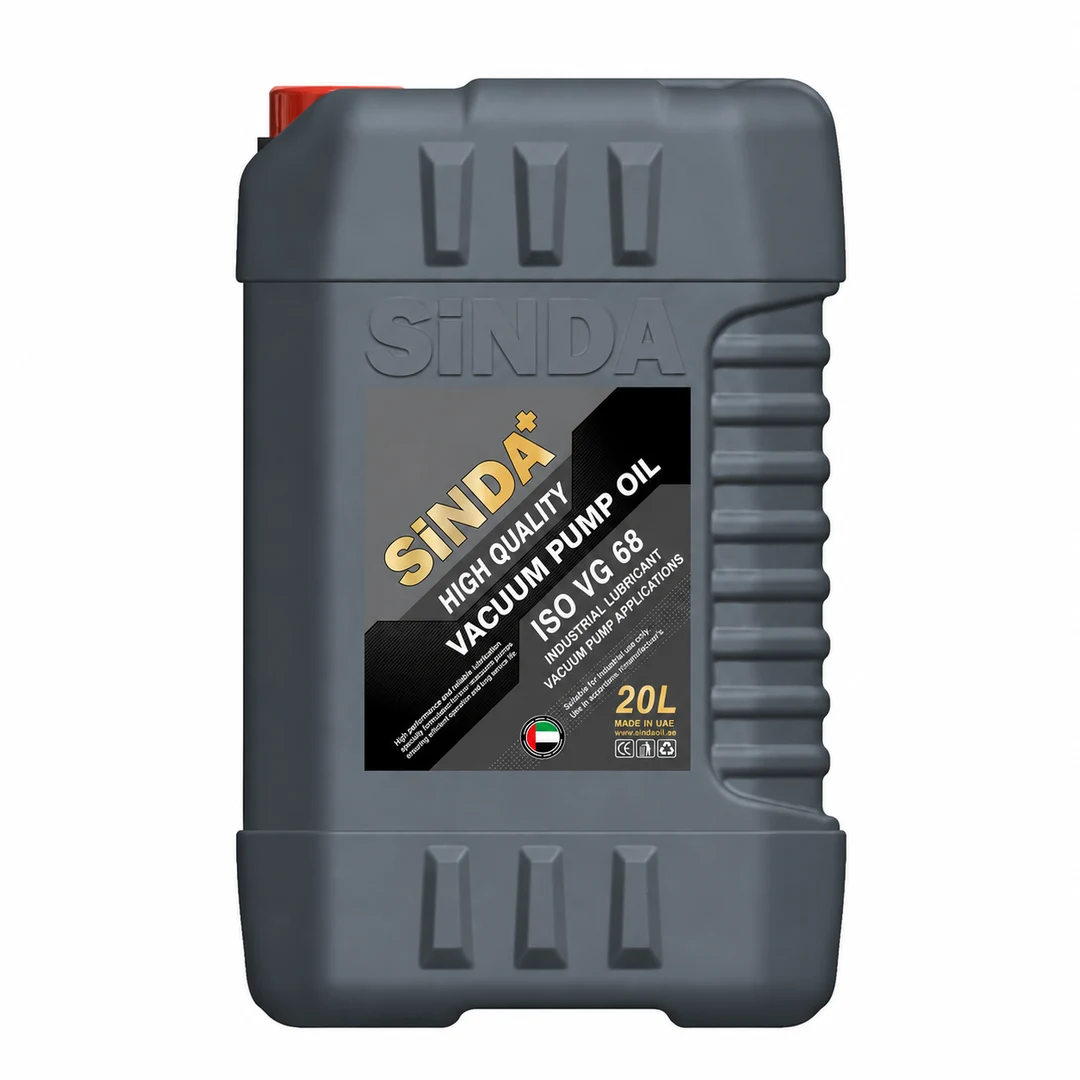
Vacuum Pump Oil 68
Vacuum Pump Oil 68 addresses oil-sealed vacuum pumps specified for ISO VG 68. Match viscosity with vapour-pressure requirements and process exposure to maintain lubrication, sealing and dependable evacuation performance.
- Product Type
- Key Performance
- Application
- Open this page on mobile
Product Overview
We offer Vacuum Pump Oil 68 for industrial buyers evaluating an ISO VG 68 fluid for compatible oil-sealed vacuum pumps. In these machines, oil can lubricate moving components and help seal the compression chamber.
The required viscosity is only part of the decision. Vapour-pressure behaviour, operating temperature and resistance to process contamination can influence whether the fluid suits the required vacuum duty.
The relevant product should therefore be selected against the pump manual and process conditions. A general-purpose oil with the same viscosity is not automatically an appropriate replacement.
Operational Applications
Potential applications include compatible oil-lubricated rotary vane pumps and other oil-sealed systems whose manufacturer specifies the selected ISO VG 68 formulation.
Industrial enquiries may involve packaging equipment, manufacturing processes, maintenance systems and laboratory installations. Each process should identify the gas or vapour reaching the pump.
Our industrial lubricant range provides the wider selection route for separate machinery lubrication.
For UAE installations, consider ventilation and actual pump temperature. An enclosed pump operating continuously can experience different fluid conditions from a lightly used service pump in the same ambient environment.
Performance Characteristics
Sealing: Appropriate oil behaviour supports the pump’s internal sealing function. Excessive dilution or contamination can change that behaviour even when the original oil grade was correct.
Lubrication: Viscosity must suit the pump at startup and operating temperature. The oil level and distribution system remain essential to component protection.
Volatility: Vapour-pressure characteristics matter when the process requires lower absolute pressure. Compare documented data under relevant conditions.
Contamination control: Water vapour, solvents and process residues can affect the fluid. Traps, gas ballast, operating procedures and oil replacement must be assessed as part of the complete vacuum system.
Compatibility & Limitations
Do not select Vacuum Pump Oil 68 for oxygen-rich, corrosive or chemically reactive service without an application-specific assessment.
Diffusion pumps, dry-pump gearboxes and oil-sealed rotary pumps can require different fluids. The general term “vacuum pump” does not establish one universal lubricant.
Food-packaging use does not automatically require or establish H1 status; assess the possible contact route and site requirements separately.
Before changing from a specialised synthetic or chemically resistant fluid, review compatibility, residual oil and the pump manufacturer’s conversion procedure. Appearance and apparent miscibility are insufficient evidence.
Vacuum Pump Oil 68 Selection Guidance
Choose this grade when the pump specifies ISO VG 68 and the selected formulation suits both vacuum level and process exposure.
For example, a packaging pump may lose evacuation performance while handling a moisture-rich process. Replacing VG 68 with a thicker oil does not remove accumulated water. Review gas-ballast operation, condensate management and fluid condition before changing the grade.
Use this simple rule: diagnose the process load as well as the pump.
A technical enquiry should identify:
- Pump manufacturer, model and oil capacity.
- Required vacuum level and pressure units.
- Gas or vapour composition and moisture exposure.
- Current oil, operating temperature and running pattern.
- Traps, filters and gas-ballast arrangements.
- Required quantity, packaging and delivery point.
Compliance & Standards
ISO 3448 defines the viscosity classification. ASTM D445 supports viscosity measurement, while other properties require their own methods and test conditions.
There is no universal viscosity-based guarantee of vacuum performance. Equipment compatibility and any mandatory approval should be demonstrated for the exact proposed fluid and service.
Industrial FAQ
Can hydraulic oil 68 be used instead?
A matching viscosity does not establish suitable volatility, sealing behaviour or process compatibility.
Will fresh oil always restore the specified vacuum?
Leaks, seals, temperature, contamination and process loading can also limit performance.
Can this grade be used for food packaging?
Assess pump requirements and the plant’s food-contact controls. The application name alone does not establish lubricant acceptance.
Technical Specifications
| Selection parameter | Reference |
|---|---|
| Viscosity grade | ISO VG 68 |
| Nominal viscosity at 40°C | 68 mm²/s |
| Classification band at 40°C | 61.2–74.8 mm²/s |
| Viscosity measurement | ASTM D445 |
| Additional fluid requirement | Vapour-pressure behaviour at stated conditions |
| Process inputs | Gas, vapour, moisture and operating temperature |
The viscosity band describes classification. It does not establish a guaranteed ultimate vacuum or a measured vapour pressure for the SiNDA formulation.
Pressure units and test temperature must accompany any vacuum-performance comparison.
Vacuum Pump Oil 68 supports compatible pumps requiring ISO VG 68 when the fluid also matches vacuum and process conditions. Provide the complete duty to avoid viscosity-only substitution. Contact SiNDA for technical evaluation and a Dubai, UAE or international quotation: +971 56 154 4177.
For direct and secure purchases with guaranteed quality, contact our experts now and benefit from free consultation.