
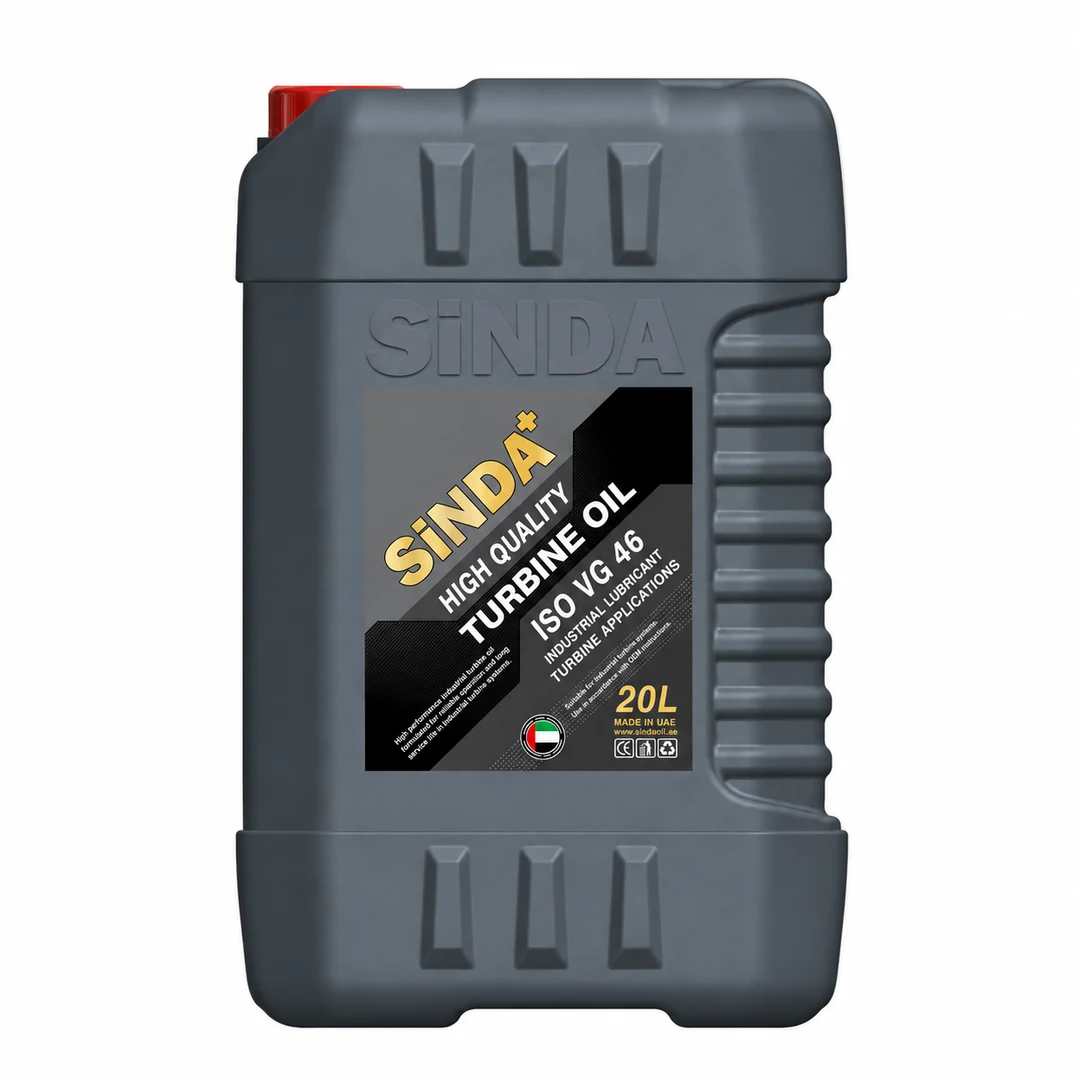
Turbine Oil 46
Turbine Oil 46 addresses turbine lubrication systems specified for ISO VG 46. Assess operating viscosity alongside water ingress, air handling and equipment requirements to support bearing protection throughout prolonged circulation.
- Product Type
- Key Performance
- Application
- Open this page on mobile
Product Overview
We supply Turbine Oil 46 for turbine and industrial circulation enquiries requiring ISO VG 46. This viscosity class provides a distinct starting point from VG 32 or VG 68, but it does not describe the complete lubricant.
The formulation must also match the machine’s oxidation, corrosion, air-release and water-separation requirements. Where the oil serves gearing or control components, those duties must be included in the technical comparison.
The purchasing objective is a documented match to the system, with the correct oil maintained in suitable condition throughout its service.
Operational Applications
Potential applications include compatible steam and hydro turbine lubrication circuits, together with industrial circulation systems whose specifications call for the selected ISO VG 46 formulation.
Confirm the actual turbine service and any additional duties. A shared sump can serve bearings, gears and other components with different performance needs.
For plants in Dubai and the UAE, report oil temperatures and cooler performance rather than selecting a grade from climate alone.
Our industrial lubricant range supports application-based selection when the requirement extends to separate hydraulic power units, gearboxes or other plant equipment.
Performance Characteristics
Film and flow balance: Appropriate viscosity supports bearing lubrication while allowing the designed circulation rate. An unnecessarily thick oil can add resistance without providing a useful operational benefit.
Moisture management: Water contamination can arise from leaks, condensation or process interfaces. Water-separation performance helps only when the system can collect and remove the separated water.
Air handling: Foam on the surface and air dispersed within the oil are different observations. Both deserve investigation because they can involve fluid condition, return flow or suction-side faults.
Condition retention: Oil analysis provides a basis for tracking viscosity, acidity, water and deterioration. Consistent sampling conditions make trends more useful.
Compatibility & Limitations
Turbine Oil 46 should not be selected for a gas turbine, geared unit or high-temperature service solely because the viscosity matches.
Check any anti-wear requirement, varnish-control specification and mandatory OEM approval. These can vary substantially between machines.
Keep fire-resistant control fluids separate unless the equipment documentation explicitly establishes a shared, compatible lubrication arrangement.
For a replacement fill, review residual oil, additive compatibility and deposit history. A change of product can disturb an existing deposit balance or complicate the interpretation of oil-analysis results, so establish a baseline and a planned monitoring schedule.
Turbine Oil 46 Selection Guidance
Choose this grade when the manufacturer specifies ISO VG 46 and the selected formulation satisfies the complete system requirement.
For example, a steam-turbine reservoir showing rising water content needs investigation of the ingress source and water-removal process. Moving from VG 46 to VG 68 does not correct the contamination mechanism and may change circulation behaviour.
The simplest selection rule is to solve the system problem before changing the viscosity specification.
A complete enquiry should identify:
- Turbine model and lubrication-system arrangement.
- Required oil category and any approval.
- Current oil, fill volume and top-up history.
- Bearing-inlet and reservoir temperatures.
- Water, foam, deposit or filter concerns.
- Required quantity and delivery location.
Compliance & Standards
ISO 3448 defines the grade. Turbine performance specifications may reference ISO 8068, DIN 51515 or equipment-builder requirements.
Laboratory methods such as ASTM D1401, ASTM D3427 and ASTM D892 evaluate different behaviours. Compare results under the stated conditions rather than treating a general “pass” description as sufficient technical evidence.
Industrial FAQ
Can VG 46 and VG 32 turbine oils be mixed?
A mixture can change viscosity and performance. Review the exact products and equipment limits before top-up.
Does turbine oil replace every circulating oil?
No. The circulation system may impose different wear, material or contamination requirements.
What information matters most for replacement?
The OEM specification, current product, system duties, operating temperature and oil-condition history provide the strongest starting point.
Technical Specifications
| Selection parameter | Reference |
|---|---|
| Viscosity grade | ISO VG 46 |
| Nominal viscosity at 40°C | 46 mm²/s |
| Classification band at 40°C | 41.4–50.6 mm²/s |
| Viscosity test | ASTM D445 |
| Key system information | Oil temperature, bearing duty and circulation arrangement |
| Additional requirements | Water, air, oxidation and any gearing performance |
These figures define the viscosity classification. The selected formulation’s current data sheet should provide its typical properties and stated performance.
When comparing alternatives, distinguish typical values, contractual acceptance limits and manufacturer approvals.
Turbine Oil 46 supports systems requiring ISO VG 46 when its formulation matches the bearing, circulation and additional equipment duties. Use the complete specification to approve a replacement. Contact SiNDA for technical review and supply enquiries in Dubai, across the UAE or internationally: +971 56 154 4177.
For direct and secure purchases with guaranteed quality, contact our experts now and benefit from free consultation.