
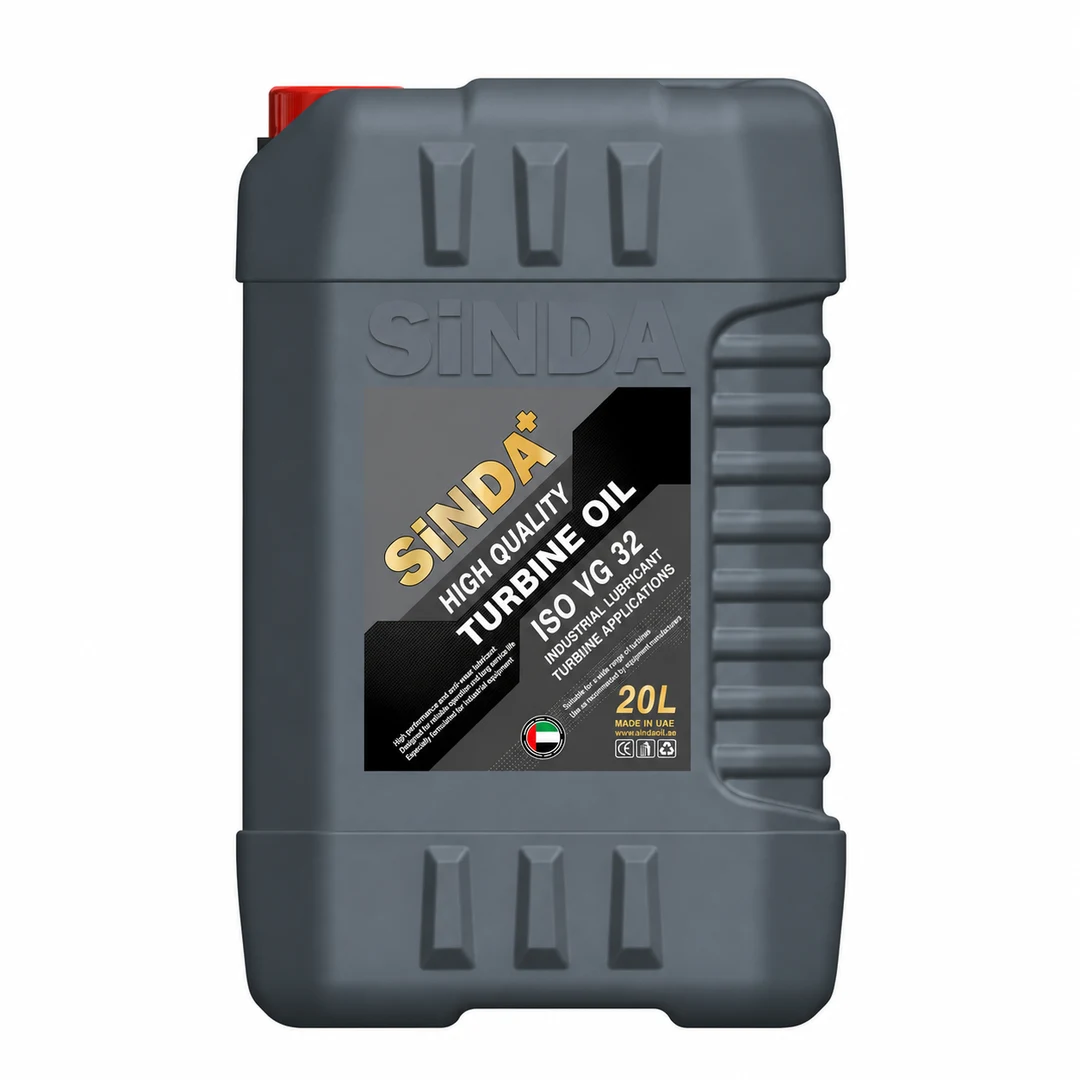
Turbine Oil 32
Turbine Oil 32 supports turbine and circulating systems requiring ISO VG 32 lubrication. Evaluate viscosity, air release and contamination control together to maintain dependable oil delivery to bearings and other specified components.
- Product Type
- Key Performance
- Application
- Open this page on mobile
Product Overview
We offer Turbine Oil 32 for industrial buyers evaluating ISO VG 32 turbine lubrication. The oil’s role extends beyond separating bearing surfaces: it must also operate within a circulation system containing pumps, filters, coolers and a reservoir.
Reliable performance depends on how the complete system handles heat, water, air and contamination. A suitable viscosity supports the required film and flow, while the formulation’s other properties determine whether it matches the turbine duty.
The equipment’s lubricant specification remains the reference for selecting the performance category and any required approvals.
Operational Applications
Evaluate this grade for compatible steam, hydro or industrial turbine lubrication circuits explicitly specifying an ISO VG 32 oil with the selected performance level.
Some auxiliary circulation systems may also require this grade. Their suitability must be established individually rather than assumed from the word “turbine.”
Identify whether the oil serves bearings only or also lubricates gearing and supplies control equipment. Shared duties can introduce additional requirements.
Within our industrial lubricants range, turbine oil is evaluated separately from industrial gear oil and hydraulic fluid, even when their viscosity numbers match.
Performance Characteristics
Bearing lubrication: Correct viscosity at the bearing inlet helps establish the intended lubricating film. Reservoir temperature alone may not describe conditions at every lubrication point.
Air release: Entrained air can affect pump delivery and system response. Reservoir residence time, return-line arrangement and suction conditions also influence the result.
Water separation: Effective separation helps the system remove free water. It must be supported by drain procedures, contamination monitoring and correction of the ingress source.
Oxidation control: Formulation stability matters during prolonged circulation. Trend oil condition to identify deterioration before deposits or viscosity changes become operational problems.
Compatibility & Limitations
Do not use Turbine Oil 32 as a substitute for a fire-resistant electrohydraulic control fluid. These systems can require fundamentally different chemistry and material compatibility.
A turbine with loaded reduction gearing may require additional anti-wear or gear performance beyond a conventional rust-and-oxidation-inhibited oil.
High-temperature gas turbines and aeroderivative equipment can also specify specialised formulations or approvals. The general product name does not establish suitability.
Before replacing an existing oil, assess additive compatibility, deposits and varnish history. Mixing two turbine oils can change performance even where both belong to ISO VG 32.
Turbine Oil 32 Selection Guidance
Choose this grade when the turbine specification requires ISO VG 32 and the selected formulation meets the complete performance requirement.
For example, a bearing-only circulation system and a geared turbine may both specify VG 32. The geared unit can impose a separate load-carrying requirement. A replacement comparison must therefore consider the gear specification rather than approving both machines from viscosity alone.
Start with the system drawing and lubricant specification.
For technical evaluation, provide:
- Turbine manufacturer, model and service.
- Bearing, gearbox and control-system duties.
- Current lubricant and reservoir volume.
- Oil temperatures, filtration and contamination history.
- Mandatory specifications and approval requirements.
- Initial-fill or top-up quantity and delivery destination.
Compliance & Standards
ISO 3448 covers the viscosity grade. ISO 8068 and relevant DIN 51515 requirements may be part of a turbine purchase specification.
A test method such as ASTM D943 describes a laboratory evaluation; its result is not a direct prediction of field service hours. Approval status must be verified for the exact formulation.
Industrial FAQ
Can hydraulic oil 32 replace turbine oil 32?
A shared viscosity does not establish equivalent air release, water separation, oxidation performance or additive compatibility.
Can I top up a different turbine-oil brand?
Check the specific products and system requirements before mixing.
Does a high oxidation-test result guarantee a fixed drain interval?
No. Temperature, contamination, system condition and monitoring determine actual service decisions.
Technical Specifications
| Selection parameter | Reference |
|---|---|
| Viscosity grade | ISO VG 32 |
| Nominal viscosity at 40°C | 32 mm²/s |
| Classification band at 40°C | 28.8–35.2 mm²/s |
| Viscosity measurement | ASTM D445 |
| System inputs | Bearing type, circulation design and oil temperature |
| Performance evidence | Current formulation data and required OEM specification |
The grade band describes classification. It does not define oxidation-test life, water-separation time, air-release time or varnish tendency.
Compare those properties using equivalent test conditions and the limits relevant to the machine.
Turbine Oil 32 is the relevant product route for a documented ISO VG 32 turbine requirement. Match the bearing, gearing and control duties before approving supply. Send your specification to SiNDA for technical evaluation and a Dubai, UAE or international quotation: +971 56 154 4177.
For direct and secure purchases with guaranteed quality, contact our experts now and benefit from free consultation.