
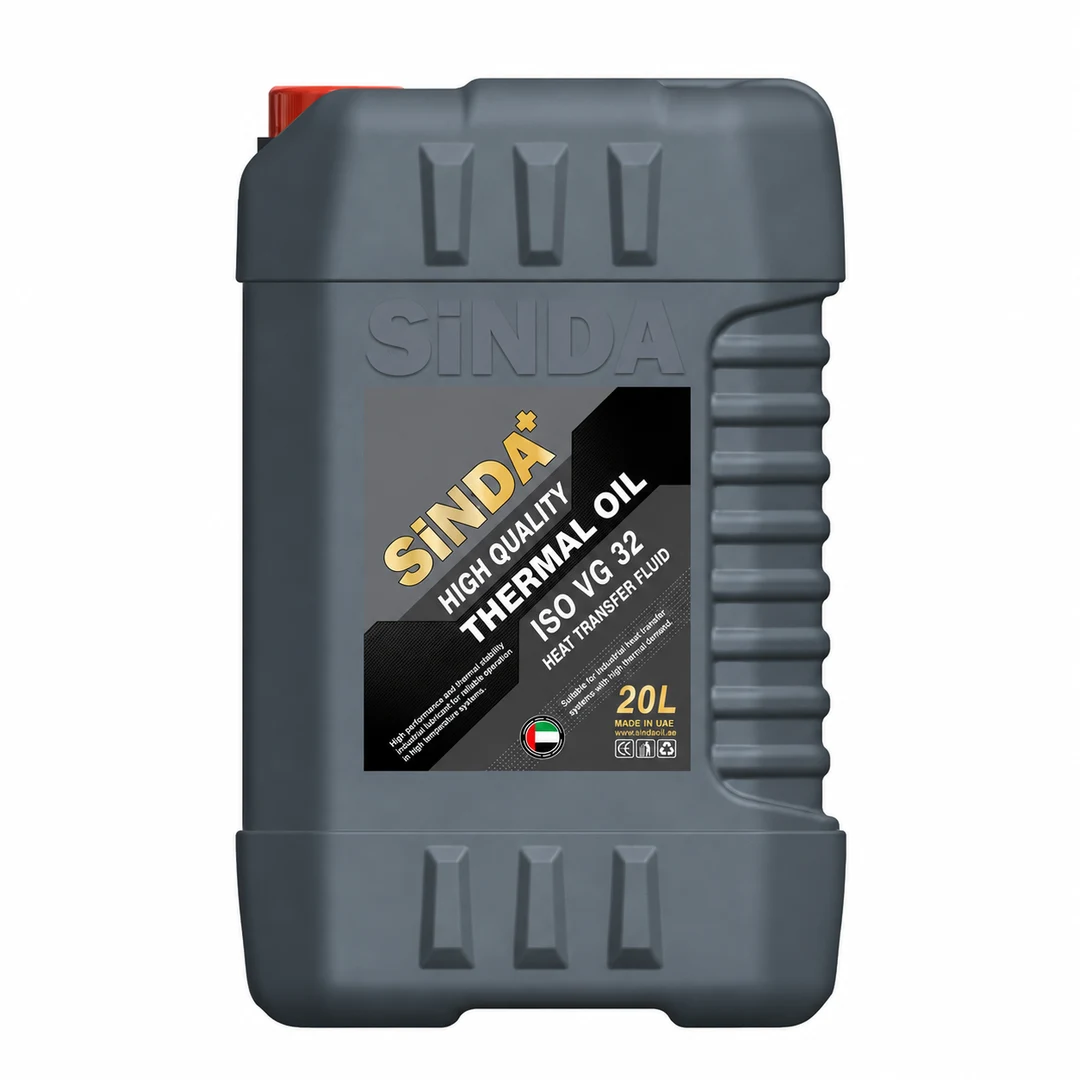
Thermal Oil 32
Thermal Oil 32 addresses heat-transfer installations requiring an ISO VG 32 fluid. Review startup pumpability and hot-circuit conditions together to maintain the intended flow through the heater and process equipment.
- Product Type
- Key Performance
- Application
- Open this page on mobile
Product Overview
We offer Thermal Oil 32 for industrial enquiries involving indirect heating systems specified for ISO VG 32. Its role is to carry heat through an engineered circuit, rather than provide general-purpose machinery lubrication.
The relatively light viscosity can support circulation in systems designed around this grade. However, the correct selection also requires the fluid’s thermal limits, vapour-pressure behaviour and compatibility with the installation.
ISO VG 32 describes viscosity at 40°C. It does not identify the maximum process temperature, film-temperature limit or fluid chemistry.
Operational Applications
Potential applications include compatible temperature-control units, jacketed vessels, heat exchangers and forced-circulation heating systems whose design calls for the selected ISO VG 32 thermal fluid.
Confirm whether the circuit is closed or open and how the expansion system controls exposure to air. These details influence selection and operating practice.
Our industrial lubricant range separates heat-transfer requirements from hydraulic and compressor lubrication.
For Dubai and UAE projects, include the lowest expected startup temperature, outdoor pipe runs and any seasonal operating changes. Normal hot operation alone does not describe the complete duty.
Performance Characteristics
Startup circulation: Appropriate low-temperature viscosity allows the pump to establish flow. This helps reduce the risk of local overheating when the heater begins supplying energy.
Heat-transfer performance: Fluid properties and circulation rate work together. Pipe dimensions, process demand and heat-exchanger condition can be as important as the selected grade.
Thermal condition: Persistent overheating can change fluid composition and operating behaviour. Monitoring should follow the selected chemistry and the heating-system requirements.
Oxidation exposure: Expansion-system design and operating practice affect contact with air. Review these factors when interpreting acidity, deposits or viscosity changes.
Compatibility & Limitations
Thermal Oil 32 should not be replaced with hydraulic oil 32 solely because the viscosity matches. A hydraulic formulation is not automatically designed or documented for thermal-fluid service.
Do not assume a common temperature rating across mineral, synthetic, aromatic or silicone thermal fluids. Chemistry and formulation determine the relevant limits.
Food-processing applications may require a documented heat-transfer-fluid contact category. ISO VG 32 does not provide that acceptance.
Before mixing or converting, review the old fluid, seals, system cleanliness and the heater manufacturer’s procedure. Residual contamination can affect the new fill and its analysis.
Thermal Oil 32 Selection Guidance
Choose this grade when the system specifies ISO VG 32 and the exact formulation satisfies the thermal and compatibility requirements.
For example, a temperature-control unit may need rapid startup circulation through narrow passages. Replacing its specified VG 32 fluid with VG 100 can increase cold-circuit resistance. The heavier grade is not automatically a better choice simply because the process operates at high temperature.
Start with the system’s permitted viscosity range and thermal limits.
For an RFQ, provide:
- Heater and process-equipment models.
- Minimum startup temperature.
- Normal and maximum bulk temperature.
- Available film-temperature or heater-design information.
- Existing fluid, analysis and replacement reason.
- System volume, preferred packs and destination.
Compliance & Standards
ISO 3448 defines the viscosity classification. ASTM D445 and other agreed physical-property methods support technical comparison.
A thermal-fluid selection also needs application-specific operating limits. Neither a viscosity grade nor a flash-point test alone certifies suitability for the heater, pressure arrangement or process-contact requirement.
Industrial FAQ
Does “32” mean a 320°C operating limit?
No. It identifies a viscosity class, not an operating temperature.
Can this fluid replace every VG 32 thermal oil?
Compare chemistry, thermal limits, materials and system requirements before replacement.
Why does startup matter in a hot process?
The oil is more viscous before heating. Insufficient initial flow can expose the heater surface to excessive local temperature.
Technical Specifications
| Selection parameter | Reference |
|---|---|
| Viscosity grade | ISO VG 32 |
| Nominal viscosity at 40°C | 32 mm²/s |
| Classification band at 40°C | 28.8–35.2 mm²/s |
| Viscosity measurement | ASTM D445 |
| Thermal limits | Formulation-specific bulk and film limits |
| System assessment | Circulation, pressure, expansion and materials |
The viscosity band is a classification reference. Thermal properties such as heat capacity, conductivity and density across operating temperature should come from the exact fluid data.
A flash-point value is not a substitute for a documented thermal operating envelope.
Thermal Oil 32 is the relevant starting point for an ISO VG 32 heat-transfer requirement. Match cold-start circulation and hot operating limits before approving the fill. Contact SiNDA for technical evaluation and a quotation for Dubai, UAE or international supply: +971 56 154 4177.
For direct and secure purchases with guaranteed quality, contact our experts now and benefit from free consultation.