
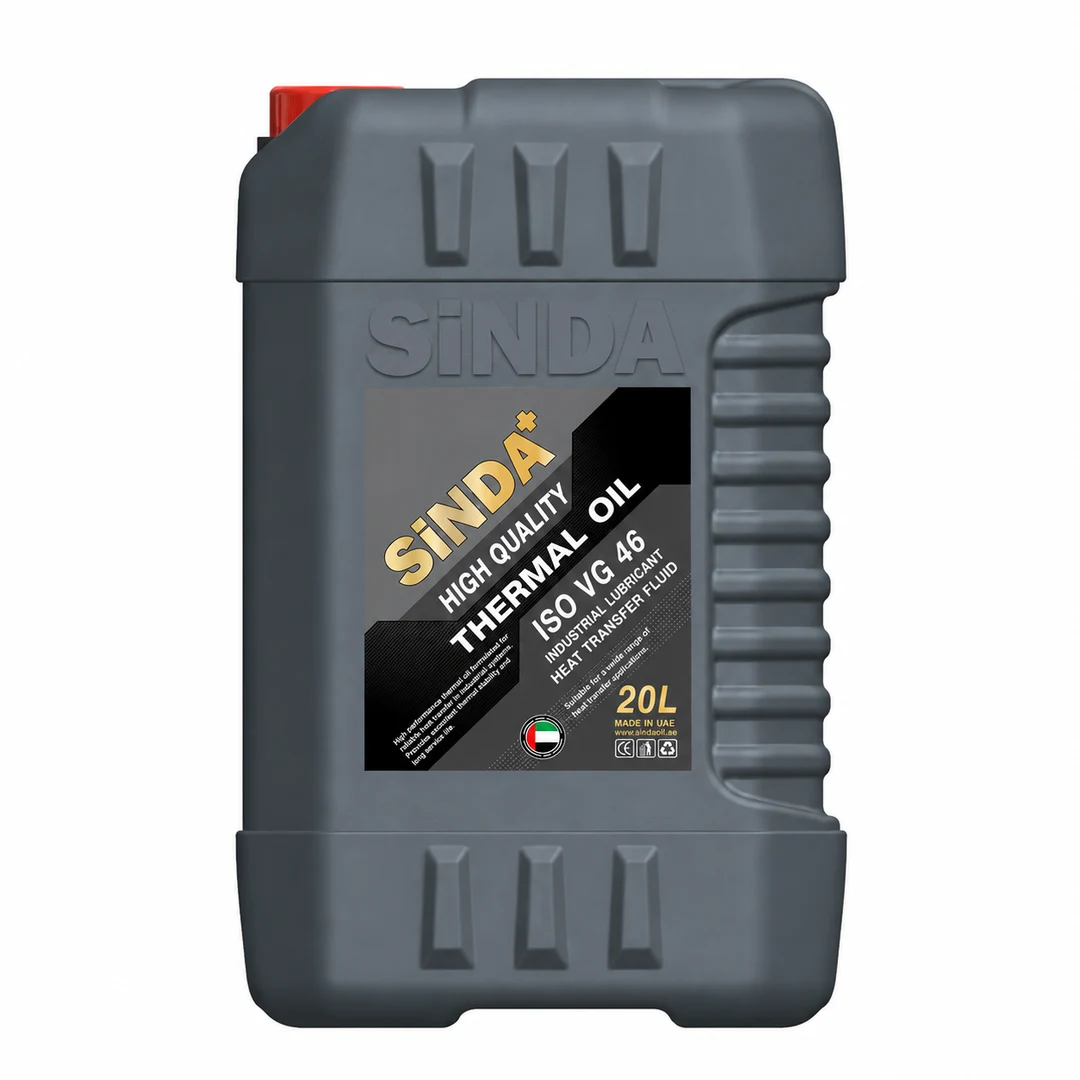
Thermal Oil 46
Thermal Oil 46 supports indirect heating circuits specified for ISO VG 46. Evaluate the fluid against the system’s circulation and temperature requirements to maintain controlled heat delivery without imposing unnecessary startup resistance.
- Product Type
- Key Performance
- Application
- Open this page on mobile
Product Overview
We supply Thermal Oil 46 for industrial buyers evaluating an ISO VG 46 heat-transfer fluid. The selection must account for the entire circuit, including the heater, pump, process equipment and expansion arrangement.
The fluid transports energy between the heat source and the process. Its operating behaviour depends on temperature, flow rate and chemistry, making a complete technical comparison more useful than a single headline property.
VG 46 provides a viscosity classification at 40°C. It does not establish whether a product is suitable for a particular heater temperature or replacement mixture.
Operational Applications
Consider this grade for compatible reactors, jacketed production vessels, heat exchangers and thermal-oil circulation units where the design specifies the selected ISO VG 46 fluid.
Identify whether heating is continuous or frequently cycled. Repeated cold starts create a different circulation challenge from a system that remains warm between production runs.
Our industrial lubricants product route helps keep thermal-fluid enquiries separate from compressor, hydraulic and gear duties.
For UAE installations, include outdoor operating conditions, plant ventilation and any restrictions on the expansion system or process area.
Performance Characteristics
Controlled flow: Correct viscosity supports circulation through the designed pipework and heat exchanger. Excessive pressure drop can reduce useful flow and increase pump demand.
Heater-surface protection: The fluid adjacent to the heater can be hotter than the bulk oil. Adequate circulation and a suitable film-temperature limit help manage this local thermal stress.
Fluid-condition management: Changes in viscosity, acidity or degradation products can indicate developing problems. Interpret results alongside heater operation and contamination history.
Process consistency: Stable flow and suitable thermal properties support repeatable heating. Lubricant selection cannot compensate for fouling, a malfunctioning control valve or inadequate heater capacity.
Compatibility & Limitations
Do not approve Thermal Oil 46 by comparing flash point alone. A higher flash point does not automatically provide a higher permissible film temperature.
Avoid mixing with another thermal fluid until chemistry and operating behaviour have been assessed. Even products that appear to blend can produce an unsuitable working mixture.
Confirm materials, seals and any process-contact requirement. A standard industrial thermal oil is not automatically accepted for potential food contact.
Open systems and specialised pressurised arrangements require their own evaluation. The operating limits of a competitor’s product should not be assigned to the proposed formulation.
Thermal Oil 46 Selection Guidance
Choose this grade when both the circulation design and selected fluid’s thermal limits match the installation.
For example, a reactor loop may reach its target temperature slowly after a change to a heavier oil. If cold-flow resistance has reduced circulation, increasing heater output can worsen local film temperature rather than improve the underlying problem. Compare flow and pressure drop before changing the operating settings.
A useful rule is to evaluate flow before assuming insufficient heating capacity.
Send:
- Heater, pump and process details.
- Minimum startup and normal operating temperatures.
- Maximum bulk and film-temperature requirements.
- Current fluid and reasons for replacement.
- Evidence of deposits, pressure changes or slow heating.
- Required fill volume, packaging and delivery location.
Compliance & Standards
ISO 3448 identifies the viscosity grade. Physical-property methods, including ASTM D445, provide a common basis for comparison.
System suitability also depends on the fluid manufacturer’s operating limits and equipment requirements. Any registration, certification or application approval must apply to the exact proposed fluid rather than the general heat-transfer-oil category.
Industrial FAQ
Can Thermal Oil 46 replace Thermal Oil 32?
Only after reviewing the system’s permitted viscosity, startup conditions and thermal-fluid compatibility.
Is a thermal oil also a hydraulic oil?
Not automatically. The formulation and intended operating duty differ.
What should be monitored after replacement?
Establish fresh-fluid properties and record flow, pressure, temperatures and the agreed oil-analysis parameters.
Technical Specifications
| Selection parameter | Reference |
|---|---|
| Viscosity grade | ISO VG 46 |
| Nominal viscosity at 40°C | 46 mm²/s |
| Classification band at 40°C | 41.4–50.6 mm²/s |
| Viscosity measurement | ASTM D445 |
| Temperature assessment | Bulk and film temperatures |
| Circuit assessment | Pumpability, pressure and expansion arrangement |
The table describes the grade classification. Use formulation-specific data for flash point, pour point, density, thermal properties and maximum operating limits.
All comparison values should identify their test method and temperature. A figure measured at one condition should not be substituted for another.
Thermal Oil 46 supports a defined ISO VG 46 indirect-heating requirement when circulation, chemistry and temperature limits align. Use the complete circuit specification to approve supply. Contact SiNDA for technical evaluation and a Dubai, UAE or export quotation: +971 56 154 4177.
For direct and secure purchases with guaranteed quality, contact our experts now and benefit from free consultation.