
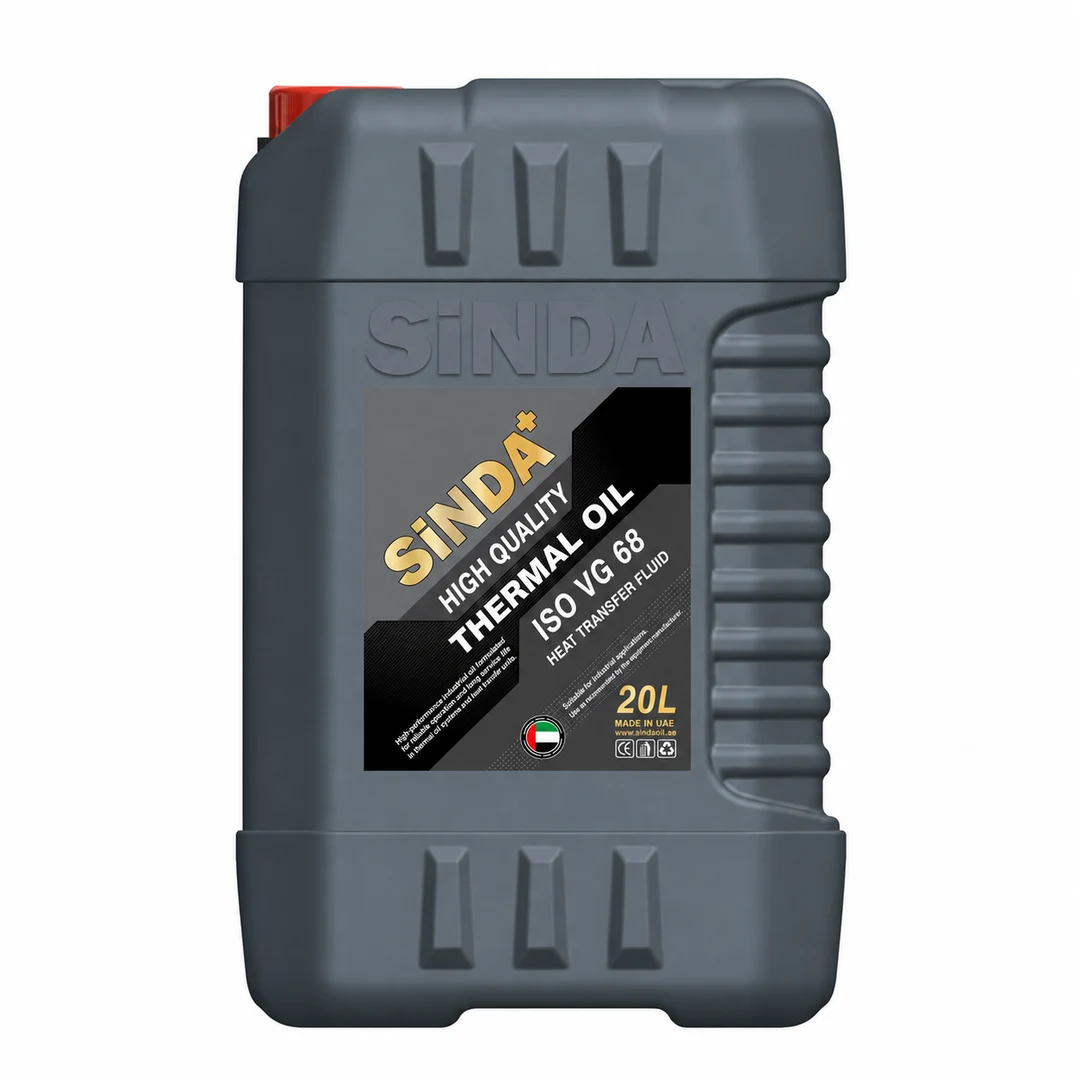
Thermal Oil 68
Thermal Oil 68 addresses heat-transfer installations requiring ISO VG 68. Give particular attention to cold-start circulation and heater-surface conditions when evaluating this heavier grade for continuous or cyclic industrial heating.
- Product Type
- Key Performance
- Application
- Open this page on mobile
Product Overview
We offer Thermal Oil 68 for industrial applications whose heating-system design calls for an ISO VG 68 thermal fluid. This grade has higher viscosity at 40°C than VG 32 or VG 46, making circulation requirements an important part of selection.
The higher number does not establish a higher maximum operating temperature. Thermal limits depend on the formulation, while the system determines the temperatures and flow conditions the fluid actually experiences.
A sound purchasing decision therefore combines the viscosity requirement with chemistry, bulk-temperature limits, film-temperature limits and the equipment’s operating procedure.
Operational Applications
Potential enquiries include compatible forced-circulation systems serving process vessels, dryers, heat exchangers and other industrial equipment specified for the selected ISO VG 68 fluid.
Describe whether the plant runs continuously, shuts down overnight or operates through repeated heating and cooling cycles. These differences influence startup and monitoring requirements.
Our industrial lubricant range provides the wider product route for facilities with separate lubrication and thermal-fluid needs.
For Dubai and UAE projects, include the actual installation conditions and lowest startup temperature rather than assuming the oil remains warm.
Performance Characteristics
Pumpability: The fluid must circulate adequately at the lowest relevant temperature. Higher cold viscosity can influence pump loading and circuit pressure drop.
Local thermal stress: Restricted flow can increase the temperature difference between the heater surface and bulk oil. Heater controls and circulation safeguards should operate according to the system design.
Condition stability: Thermal degradation and oxidation can affect the fluid in different ways. Monitoring should identify changes relevant to the selected chemistry and process.
Heat-exchanger performance: Deposits and fouling reduce useful heat transfer. Replacing the fluid without addressing the contamination or overheating source can lead to repeated deterioration.
Compatibility & Limitations
Thermal Oil 68 is not a universal upgrade from lighter heat-transfer oils. A system designed for VG 32 can respond poorly to a much heavier startup viscosity.
Do not substitute another industrial oil carrying “68” without documented thermal-fluid suitability.
Confirm compatibility with the existing charge and system materials. A replacement programme may require draining, cleaning or flushing depending on the old fluid and deposit condition.
Food-contact acceptance, open-system suitability and pressurised operation require separate evidence. None follows automatically from the viscosity grade or a general statement that the fluid is intended for industrial heating.
Thermal Oil 68 Selection Guidance
Select this grade only where the system’s viscosity requirement and the formulation’s thermal limits support it.
For example, a plant that leaves its thermal loop idle over a shutdown may restart with substantially cooler oil. If the pump cannot provide the required flow at that viscosity, the heater can experience excessive local temperature before the process reaches its setpoint. Review startup conditions before increasing heating intensity.
The simple rule is to qualify the coldest startup and hottest operating condition.
Provide:
- Heater and circulation-system specifications.
- Minimum startup temperature and pump limitations.
- Normal and maximum bulk temperature.
- Film-temperature requirement or design information.
- Current fluid, deposits and analysis history.
- Fill volume, delivery destination and preferred packaging.
Compliance & Standards
ISO 3448 defines the viscosity classification, with viscosity commonly measured by ASTM D445.
Additional tests describe physical properties or fluid condition; they do not independently certify the complete application. The selected formulation’s documented limits and the heating-system specification should govern approval of the operating envelope.
Industrial FAQ
Does VG 68 transfer more heat than VG 32?
The grade alone cannot answer that. Flow and thermal properties across the operating range must be considered.
Can a high flash point justify a higher setpoint?
No. Use the documented bulk and film-temperature limits.
Should a contaminated system simply receive fresh oil?
Identify and correct the contamination source, then assess the necessary cleaning and replacement procedure.
Technical Specifications
| Selection parameter | Reference |
|---|---|
| Viscosity grade | ISO VG 68 |
| Nominal viscosity at 40°C | 68 mm²/s |
| Classification band at 40°C | 61.2–74.8 mm²/s |
| Viscosity measurement | ASTM D445 |
| Essential thermal data | Bulk and film-temperature limits |
| Essential system data | Flow, pressure, pump limits and expansion design |
These figures classify viscosity only. Formulation-specific thermal properties and physical characteristics should be used in engineering calculations.
The purchase specification should distinguish normal operating conditions from temporary excursions and state which limits apply to each.
Thermal Oil 68 is an evaluation route for systems specified for ISO VG 68 heat-transfer service. Confirm startup flow, thermal limits and compatibility before purchase. Discuss your application with SiNDA for technical evaluation and a quotation covering Dubai, the UAE or international supply: +971 56 154 4177.
For direct and secure purchases with guaranteed quality, contact our experts now and benefit from free consultation.