
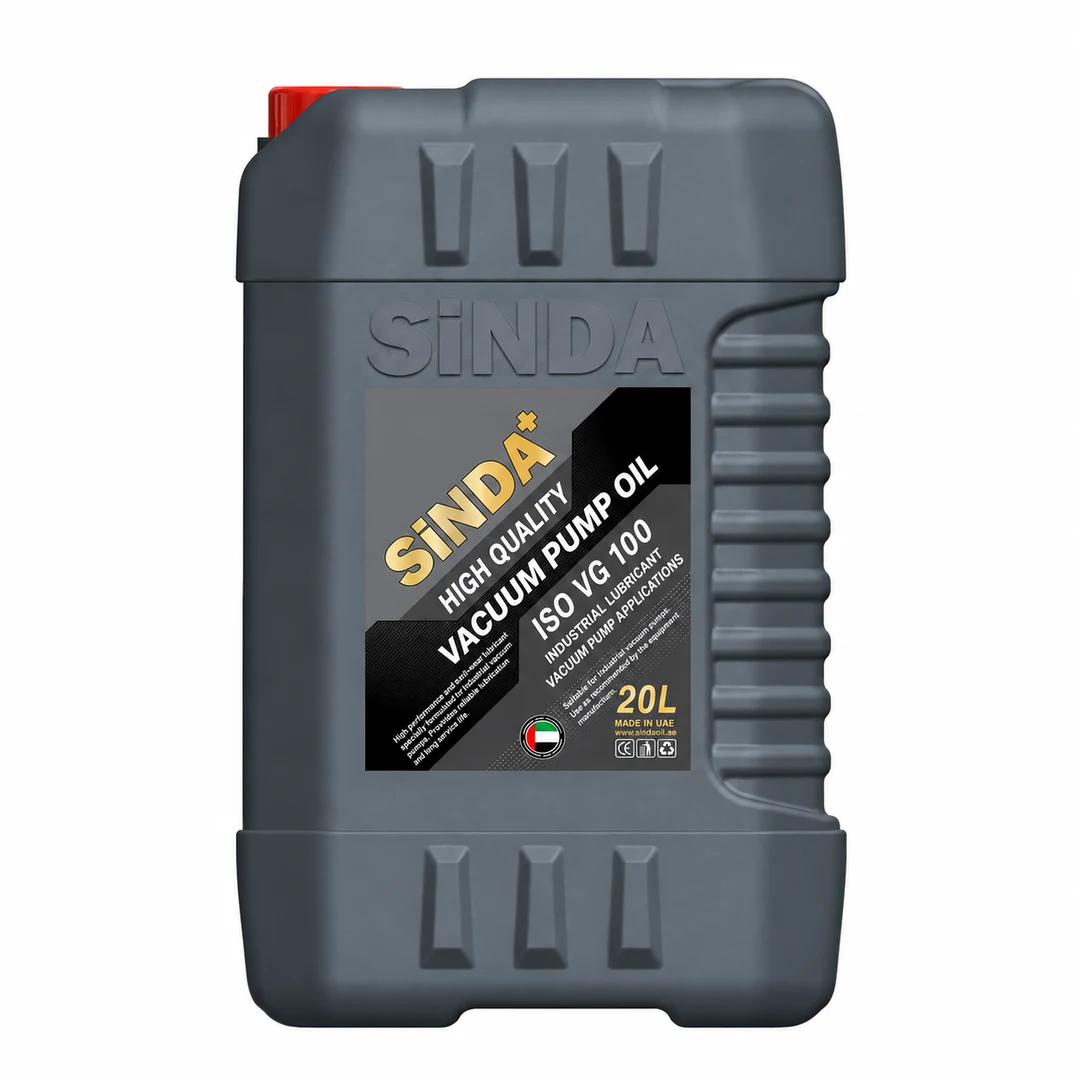
Vacuum Pump Oil 100
Vacuum Pump Oil 100 supports pumps requiring ISO VG 100 lubrication. Review startup resistance, internal sealing and process contamination together before choosing a heavier fluid for continuous vacuum service.
- Product Type
- Key Performance
- Application
- Open this page on mobile
Product Overview
We supply Vacuum Pump Oil 100 for industrial enquiries where the pump manufacturer specifies ISO VG 100. This grade has higher viscosity at 40°C than VG 68, affecting both lubrication and the resistance experienced during startup.
The correct choice also depends on the fluid’s volatility and its interaction with gases or vapours entering the pump. A heavier oil cannot automatically deliver a deeper vacuum or overcome a process-contamination problem.
The purchasing specification should therefore identify the pump, required pressure, operating temperature and exact fluid-performance requirement.
Operational Applications
Evaluate this grade for compatible rotary vane and other oil-lubricated vacuum systems explicitly requiring an ISO VG 100 fluid.
Possible duties include manufacturing, process evacuation and continuous industrial vacuum installations. Identify whether the fluid lubricates the pumping chamber, a gearbox or a separate bearing circuit.
Our industrial lubricant portfolio supports selection for these different machinery duties.
For Dubai and UAE facilities, include cooler condition, ventilation and operating schedule. A pump’s sustained oil temperature provides stronger selection evidence than the outdoor air temperature alone.
Performance Characteristics
Lubricating film: The specified viscosity supports the pump’s intended lubrication conditions. Too little viscosity or excessive dilution can reduce the available film.
Internal sealing: Oil condition can influence sealing in an oil-sealed pump. Process contamination may change performance before obvious mechanical damage appears.
Startup behaviour: Higher viscosity can increase starting resistance. Confirm that the pump and motor can operate within the manufacturer’s limits at the lowest expected startup temperature.
Condition retention: Monitor the properties relevant to the process. Water, solvents or reaction products can require action independently of the oil’s running hours.
Compatibility & Limitations
Vacuum Pump Oil 100 should not be used to compensate for worn vanes, damaged seals, leaks or a blocked exhaust element without diagnosing the actual fault.
Do not assume that a product suitable for an ordinary air-handling pump is appropriate for oxygen-rich or chemically aggressive service.
A diffusion-pump fluid, specialised PFPE lubricant and conventional vacuum-pump oil have different application requirements. Their product families are not interchangeable through viscosity matching.
For replacement, identify the current chemistry and any conversion requirements. Check seals, exhaust filtration and residual contamination before introducing the new charge.
Vacuum Pump Oil 100 Selection Guidance
Choose this grade when ISO VG 100 is specified and the proposed fluid satisfies the required vacuum and process conditions.
For example, a pump designed for VG 100 may handle solvent vapour that gradually dilutes the oil. The viscosity measured after service can fall while the pump’s sealing behaviour deteriorates. Selecting an even thicker fresh oil does not resolve solvent ingress; process protection and replacement practice need attention.
The simple guide is to match the pump specification and manage what enters the oil.
Include:
- Pump model, lubrication arrangement and capacity.
- Required pressure, units and evacuation duty.
- Gas and vapour composition.
- Startup and normal operating temperatures.
- Existing lubricant and condition results.
- Any seal, exhaust or contamination problem.
- Quantity, packaging preference and destination.
Compliance & Standards
ISO 3448 establishes the viscosity classification. Physical-property and contamination tests should be identified individually with their conditions.
A product’s grade does not establish a guaranteed ultimate pressure, service interval or chemical resistance. Any machine-builder requirement or mandatory approval must be assessed for the selected formulation.
Industrial FAQ
Does VG 100 create a deeper vacuum than VG 68?
Not necessarily. Vapour pressure, pump design, temperature, leaks and contamination also matter.
Can I mix two VG 100 vacuum oils?
Check the exact formulations and changeover requirements before mixing.
When should contaminated oil be changed?
Use the pump instructions and process-specific condition limits. A calendar interval alone may miss a contamination event.
Technical Specifications
| Selection parameter | Reference |
|---|---|
| Viscosity grade | ISO VG 100 |
| Nominal viscosity at 40°C | 100 mm²/s |
| Classification band at 40°C | 90–110 mm²/s |
| Viscosity measurement | ASTM D445 |
| Essential vacuum input | Required absolute pressure and units |
| Essential process input | Gas chemistry and contamination exposure |
These values define viscosity classification. Measured vapour pressure, density, flash point and other physical properties must refer to the exact formulation.
Do not compare pressure claims without checking whether they describe the fluid, an unloaded pump test or a complete operating process.
Vacuum Pump Oil 100 is the relevant product route for pumps specifying ISO VG 100 and compatible fluid performance. Evaluate vacuum requirements and process exposure alongside viscosity. Contact SiNDA for application review and supply enquiries in Dubai, across the UAE or internationally: +971 56 154 4177.
For direct and secure purchases with guaranteed quality, contact our experts now and benefit from free consultation.